Home > Marine Hub > Marine Wildlife > Indo-Pacific Bottlenose Dolphins of Jurien Bay
────────────
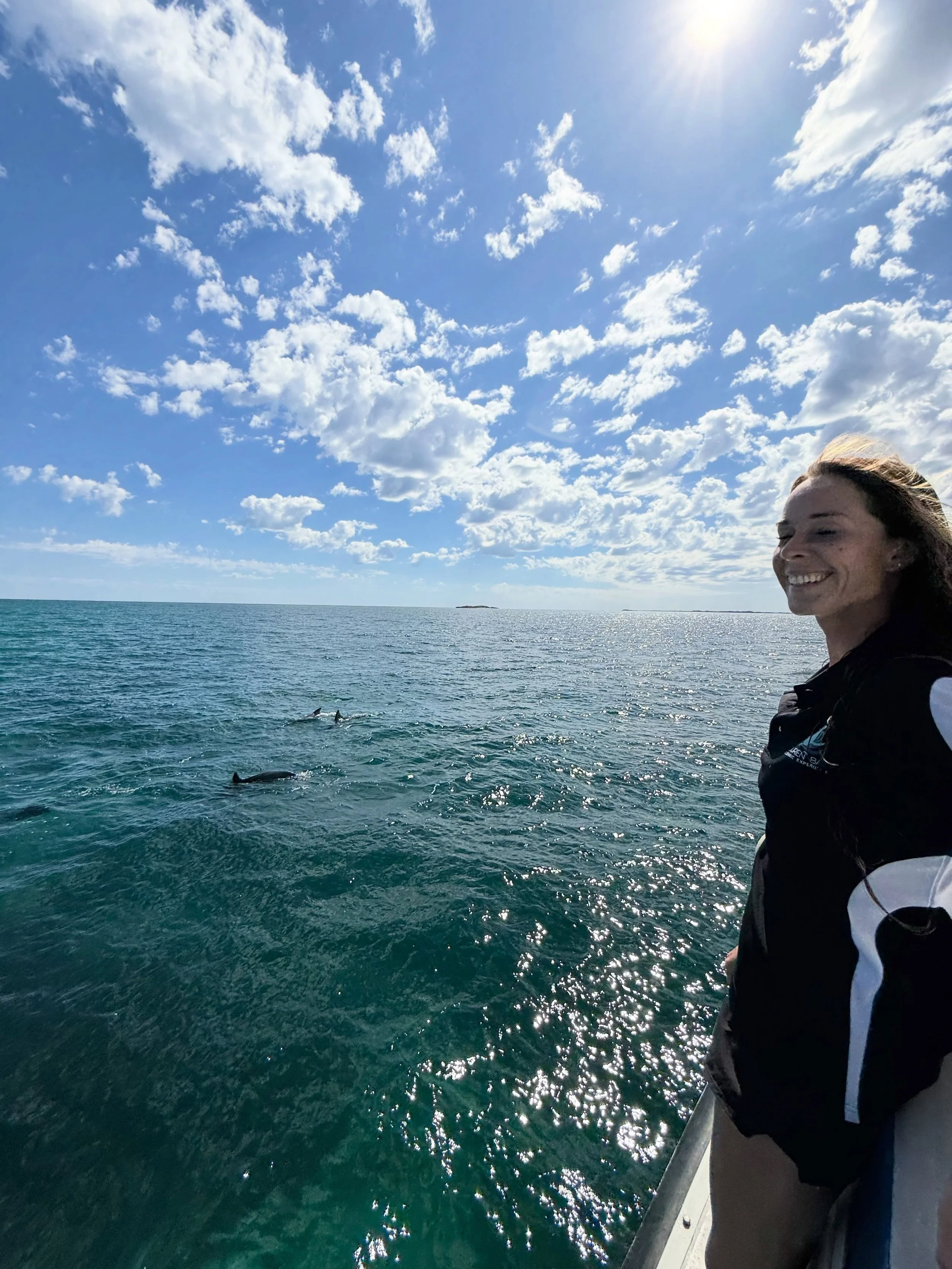
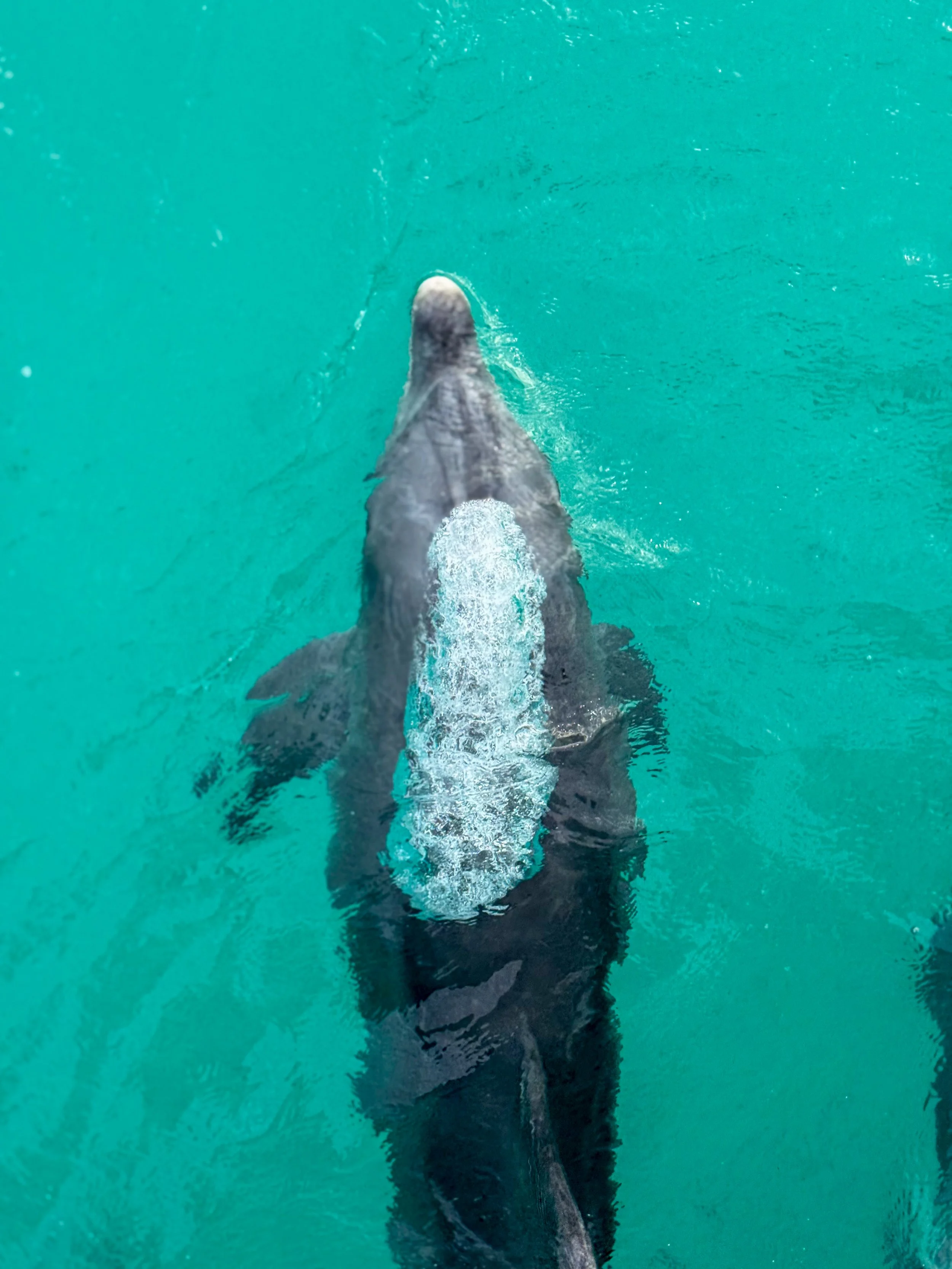
The Indo-Pacific Bottlenose Dolphin is one of the most iconic residents of the Jurien Bay Marine Park. Found here year-round, these intelligent and highly social marine mammals are often seen travelling between the islands, surfing the bow waves of boats and sharing the waters with Australian sea lions. Discover their behaviour, habitat, conservation and the best places to see them in the wild.
Last update 10 August 2026.
Indo-Pacific Bottlenose Dolphins of Jurien Bay
Based on over six decades of experience exploring the wildlife of the Jurien Bay Marine Park.
Local knowledge. Real experience. Trusted information.
Indo-Pacific Dolphin Fast Facts
──────
Species
Indo-Pacific Bottlenose Dolphin (Tursiops aduncus)

Size
2-2.7 m.
150-230 kg.

Lifespan
30-50 years.
Diet
Fish, squid and crustaceans

Season
Seen all year round in Jurien Bay
1 . What Dolphins Live in Jurien Bay?
────
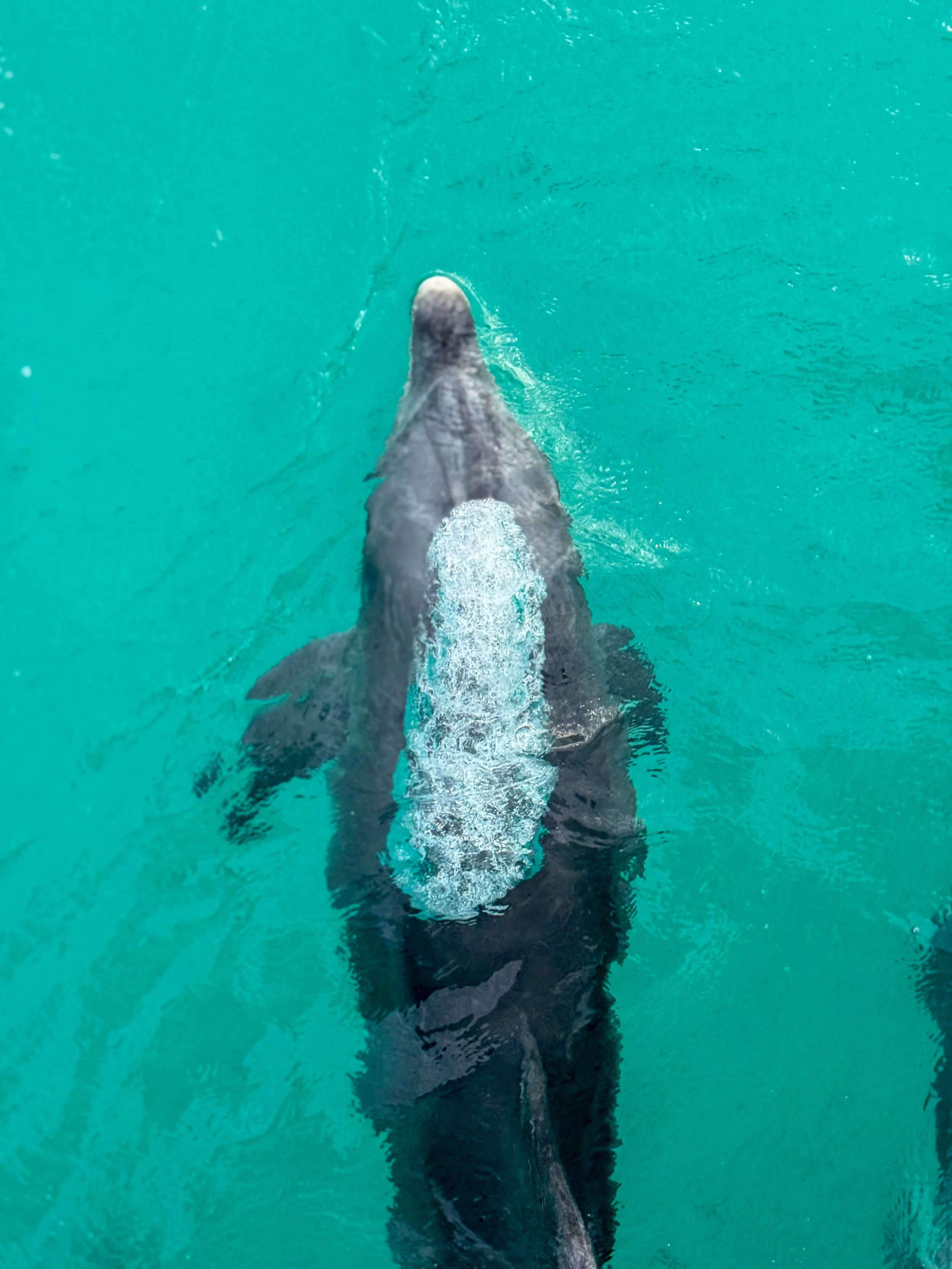
The calm, sheltered waters of the Jurien Bay Marine Park provide important habitat for the Indo-Pacific bottlenose dolphin (Tursiops aduncus). This coastal species is commonly found around shallow bays, islands, reefs and seagrass meadows where food is abundant.
Our crew encounters these dolphins throughout the year as they travel between different parts of the Marine Park. Their movements are influenced by food availability, ocean conditions and the changing activity of fish throughout the local ecosystem.
Indo-Pacific bottlenose dolphins feed on fish, squid and crustaceans. They use several hunting techniques and can work individually or cooperatively when pursuing prey.
Their intelligence, adaptability and complex social lives make them one of the most fascinating marine animals found in Jurien Bay.
2 . Behaviour & Social Life
────
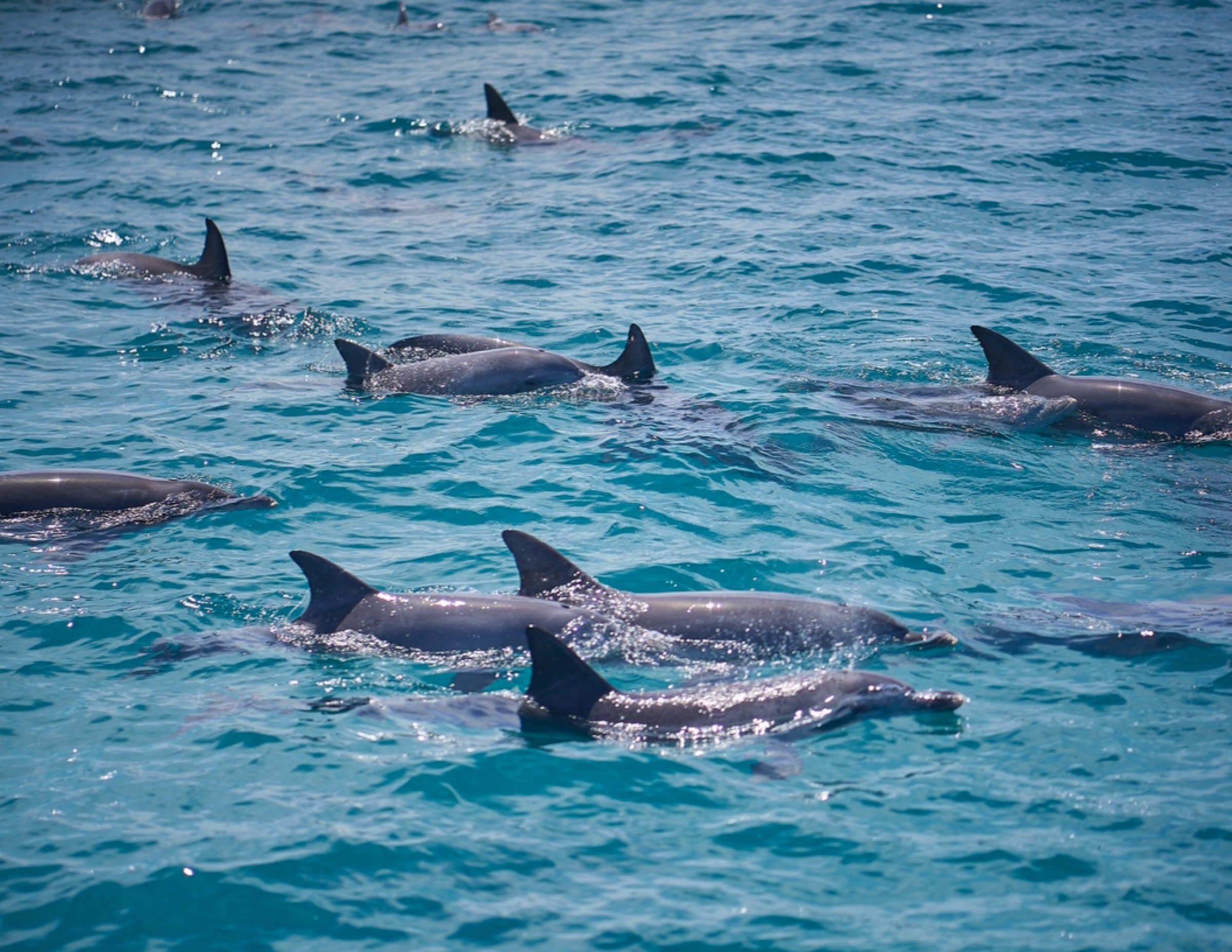
Indo-Pacific bottlenose dolphins live in fluid social communities. Group membership can change regularly as individuals join and separate from different companions. Their relationships are influenced by family connections, shared habitats, learned behaviours and individual social bonds.
Research into female Indo-Pacific bottlenose dolphins in Shark Bay has found that their social relationships are shaped by a combination of kinship, habitat and culturally learned foraging techniques. Mothers and calves form especially strong bonds, with calves remaining close to their mothers as they learn how to navigate, communicate and find food.
Male dolphins can form long-term alliances, often in pairs or small groups. Research from Shark Bay has shown that these alliances support cooperation and reproductive success. The structure and strength of these relationships can vary between populations and individuals.
Communication plays an important role in dolphin society. Indo-Pacific bottlenose dolphins use whistles, clicks, body movements and physical contact to exchange information. Each dolphin develops an individually distinctive signature whistle that helps other dolphins recognise and locate them.
Play is also an important part of dolphin development. Young dolphins chase one another, investigate objects and practise movements that help develop coordination and social skills.
Some Indo-Pacific bottlenose dolphins in Shark Bay use marine sponges as tools when searching for food on the seafloor. Known as sponging, this specialised foraging technique is learned and passed between dolphins through social and family relationships.
These complex relationships, learned behaviours and communication skills make every dolphin encounter in Jurien Bay a remarkable opportunity to observe wild marine life.
3 . Our Encounters with Jurien Bay’s Dolphins
────
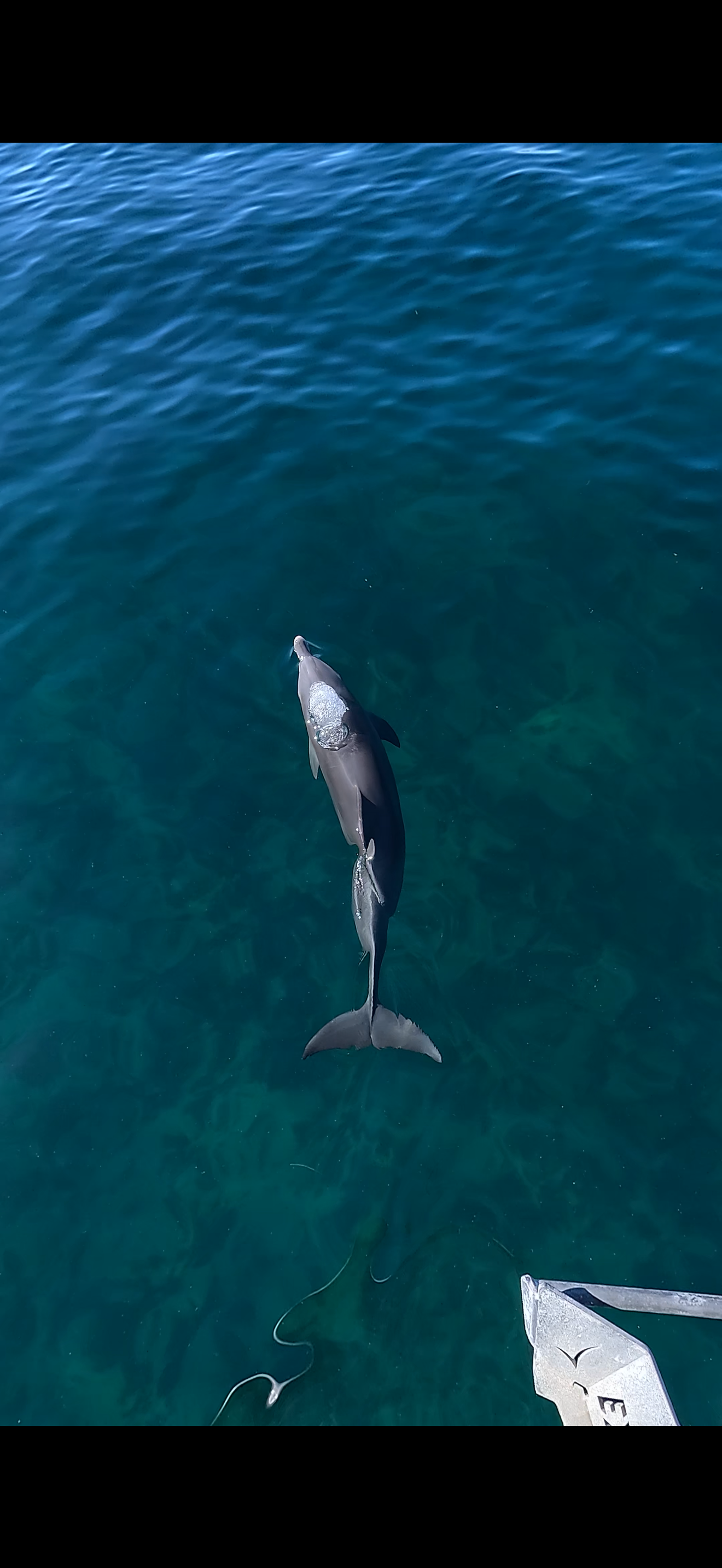
One of the greatest privileges of operating on the water every day is becoming familiar with the dolphins that call Jurien Bay home. Many individuals have distinctive dorsal fins, scars and markings that allow them to be recognised across repeated encounters.
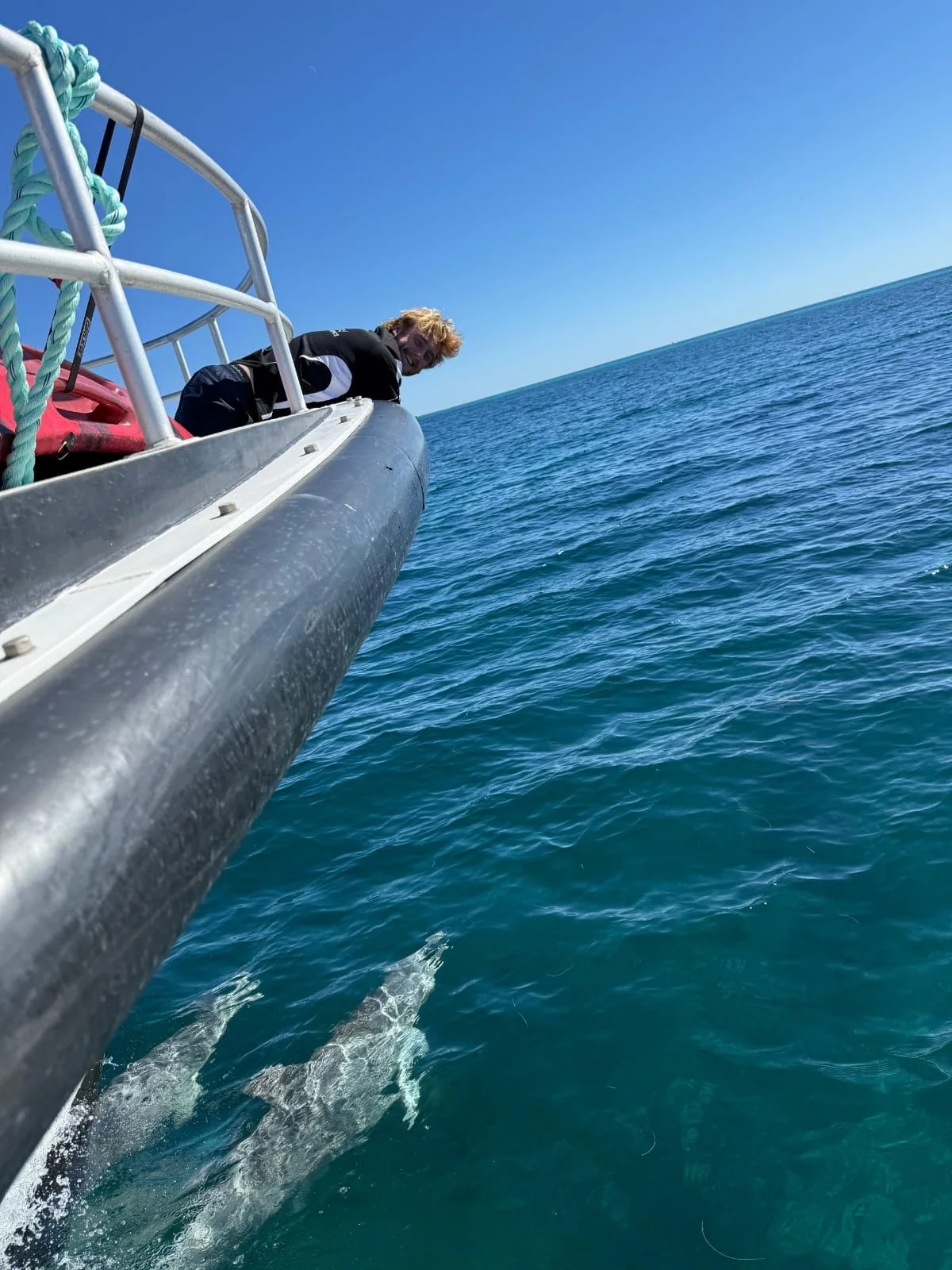
Dolphins sometimes choose to approach our vessel or travel nearby. Our crew responds by reducing speed gradually, avoiding sudden changes in direction and giving the animals the space they need to continue naturally. The dolphins decide how they move through the area and how long they remain nearby.
Dolphins and Australian sea lions sometimes use the same productive waters around the islands, reefs and seagrass meadows of the Marine Park. These shared feeding grounds create special opportunities to observe several native marine species within the same environment.
Over the years, we have come to recognise some of Jurien Bay’s long-term resident dolphins. One individual regularly seen around the town jetty can be identified by the network of scars across its back and dorsal fin. These distinctive markings reflect a life spent navigating the natural challenges of the ocean.
Every encounter contributes to our understanding of how dolphins use the Marine Park. Their movements, social groups and behaviour can change from day to day, giving our crew and guests a new insight into their lives each time they appear.
Seeing these animals living naturally in Jurien Bay reinforces the importance of protecting the habitats, food sources and coastal waters they depend on.
4 . Where Can You See Dolphins?
────
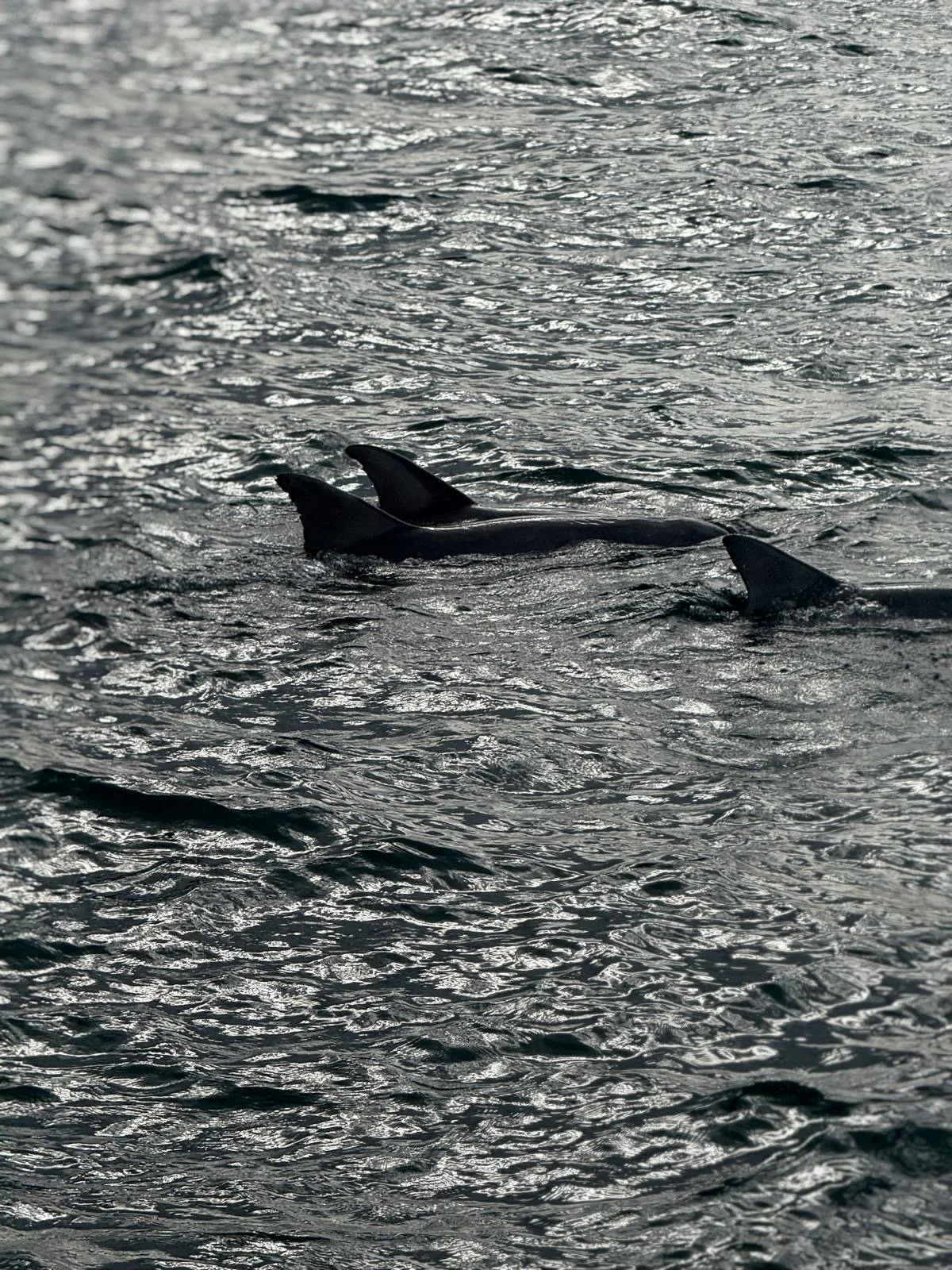
Indo-Pacific bottlenose dolphins can be encountered throughout the Jurien Bay Marine Park. The park’s sheltered bays, limestone islands, reef systems and seagrass meadows provide productive coastal habitats where dolphins can travel, feed and socialise.
Our crew regularly sees dolphins moving between island groups and reef systems in response to changing food availability and ocean conditions. Schools of fish gathering near reefs and seagrass meadows can attract dolphins into these areas.
Dolphins are sometimes visible from local beaches, coastal lookouts and the Jurien Bay marina. Boat-based experiences also provide opportunities to observe their natural movements within the Marine Park. All sightings must be managed with the required separation distances and respect for the animals’ direction of travel.
Dolphin sightings are determined by their natural movements. The duration and location of each sighting depends on feeding activity, social behaviour and conditions within the Marine Park.
Indo-Pacific bottlenose dolphins are encountered in Jurien Bay throughout the year. Their regular presence makes them an important part of the region’s marine environment and a valued wildlife sighting for visitors.
5 . Best Time to See Dolphins?
────
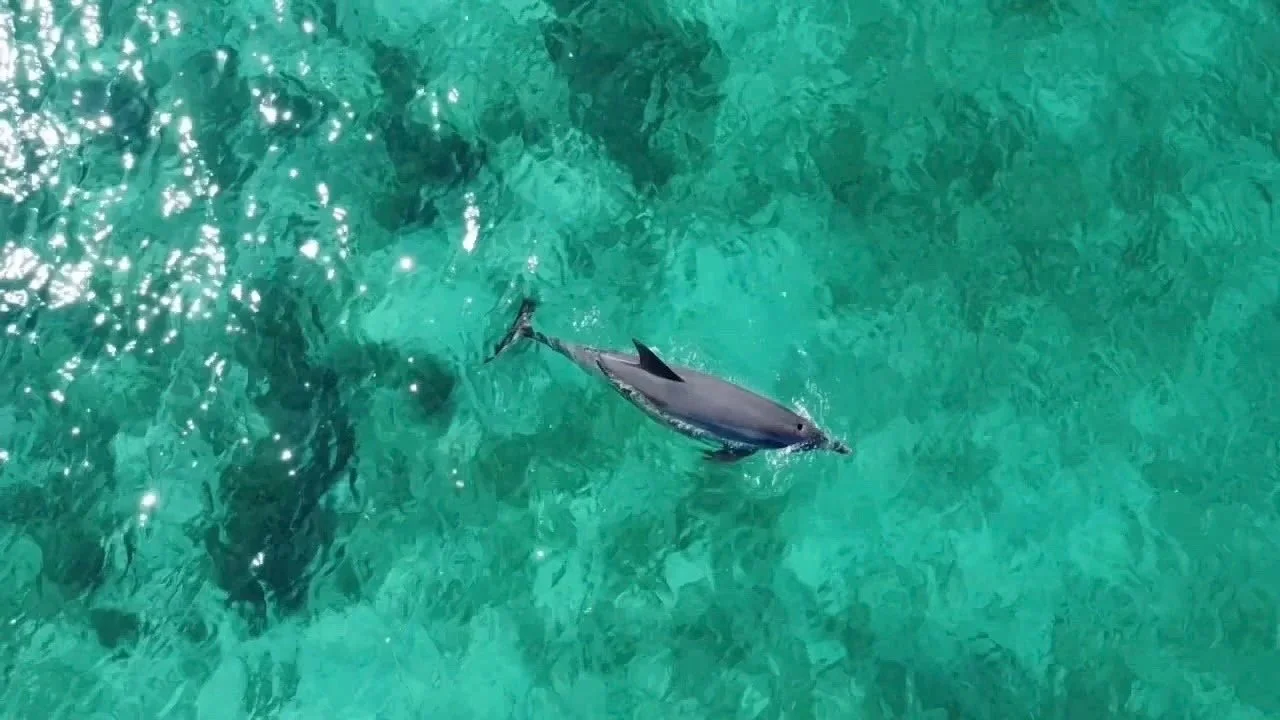
Indo-Pacific bottlenose dolphins can be encountered in Jurien Bay throughout the year. There is no designated dolphin season, and sightings are possible during every month.
Ocean conditions can affect visibility. Calm mornings with light winds often create a smoother surface, making dolphins easier to spot as they travel and surface to breathe.
Dolphin activity is also influenced by food availability. Schools of baitfish gathering around reefs, islands and seagrass meadows can attract dolphins into these productive feeding areas.
Sightings can never be guaranteed. Our crew regularly encounters dolphins during marine experiences across the year, with each sighting occurring entirely through natural wildlife activity.
The best time to visit depends on the weather, sea conditions and the wider experience you are planning. Dolphin encounters remain possible throughout the year.
6 . Why Dolphins Matter
────
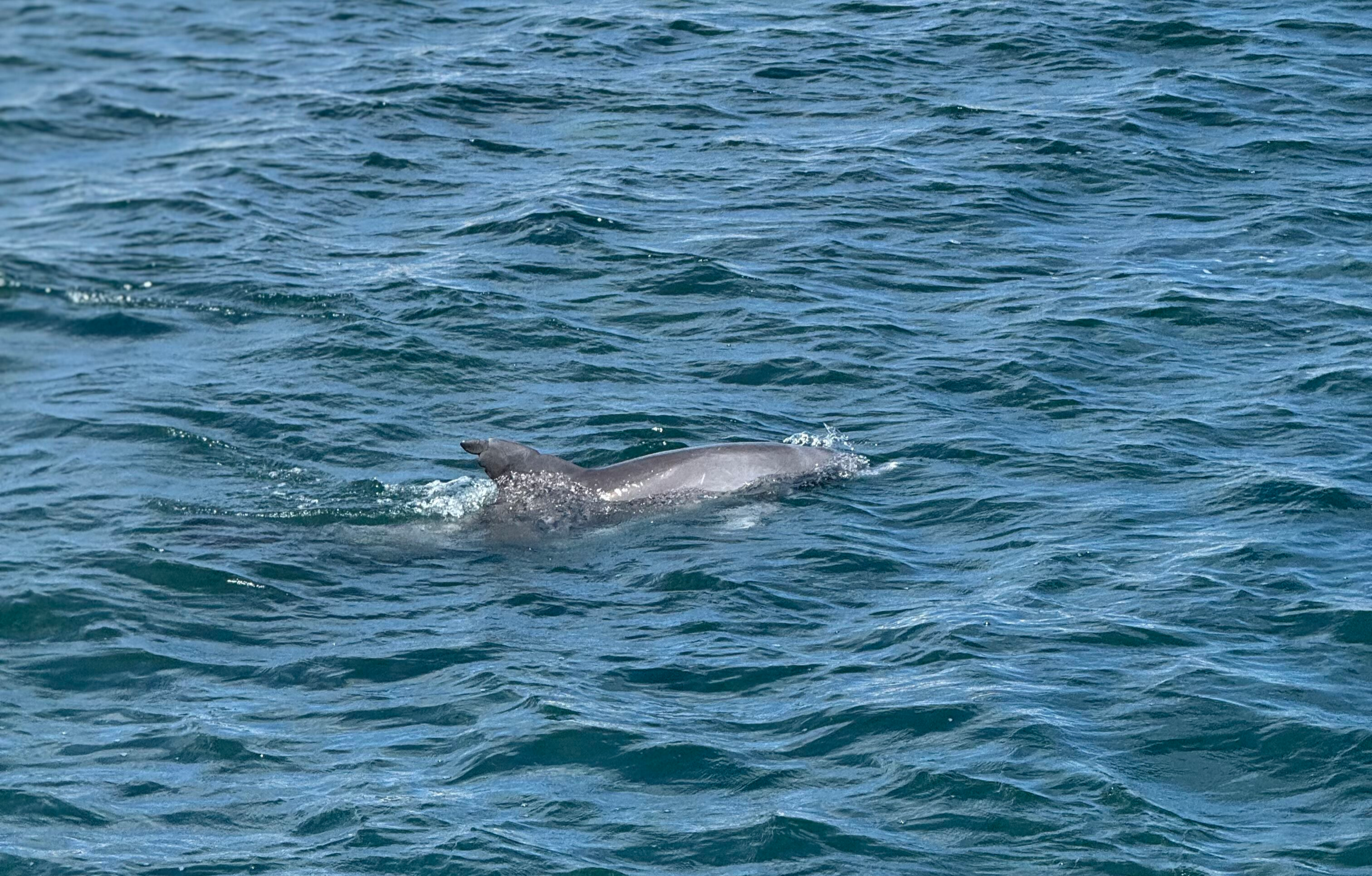
Indo-Pacific bottlenose dolphins are an important part of Jurien Bay’s coastal ecosystem. As upper-level predators, they feed on fish, squid and crustaceans and form part of the complex food web that connects the Marine Park’s reefs, seagrass meadows and open waters.
Scientists study dolphin health, distribution and behaviour to better understand changes occurring within marine environments. Shifts in food availability, water quality, pollution and habitat condition can all affect dolphin populations over time.
Protecting dolphins requires the protection of the habitats and food sources they depend on. Healthy reefs, seagrass meadows, island ecosystems and coastal waters support dolphins and countless other species throughout the Jurien Bay Marine Park.
Research, responsible wildlife tourism and careful marine management all contribute to their long-term protection. These efforts help ensure dolphins can continue living and behaving naturally in Jurien Bay’s waters.
7 . Responsible Dolphin Viewing
────
Watching wild dolphins is a privilege. Every encounter must give the animals enough space to feed, travel, rest and care for their young without disturbance.
Western Australian wildlife regulations set minimum separation distances for dolphins:
Vessels, including kayaks and sailboards, must remain at least 100 metres away.
People in the water must remain at least 50 metres away.
Drones must remain at least 60 metres away.
Dolphins must never be chased, circled, touched or fed. Vessels must not block their direction of travel or separate individuals from a group.
Dolphins occasionally approach vessels and begin riding the bow wave. In this situation, vessel operators should reduce speed gradually, avoid sudden changes in direction and move away slowly when it is safe to do so. A speed below six knots should be maintained until the required 100-metre separation distance has been restored.
A person approached by a dolphin in the water must move away as soon as reasonably possible and re-establish the required 50-metre distance.
These requirements protect dolphins from stress, disrupted feeding, interrupted rest and the risk of vessel strikes. Full guidance is available from the Western Australian Department of Biodiversity, Conservation and Attractions.
At Jurien Bay Oceanic Experience, every dolphin sighting is managed with respect for the animals and the environment they call home. Our crew observes their movements, reduces vessel speed and gives them the space required to continue naturally.
Responsible viewing protects the dolphins and gives guests the opportunity to experience genuine wild behaviour within the Jurien Bay Marine Park.
-
The most commonly encountered dolphin in the Jurien Bay Marine Park is the Indo-Pacific Bottlenose Dolphin (Tursiops aduncus). These dolphins are year-round residents and are frequently seen travelling between the islands, reefs and seagrass meadows that make up this unique marine environment.
-
Yes. Indo-Pacific Bottlenose Dolphins live in Jurien Bay throughout the year, making them one of the region's most reliable wildlife sightings. While encounters can never be guaranteed, dolphins are regularly seen in the Marine Park during every season.
-
Dolphins sometimes approach moving vessels and ride the pressure wave created at the bow. This allows them to glide through the water and may also provide an opportunity to investigate their surroundings.
Western Australian guidance instructs vessel operators to reduce speed gradually, avoid sudden course changes and move away slowly when safe. The required 100-metre separation distance must be restored as soon as reasonably possible.
-
Wild dolphins can occasionally be seen from local beaches, lookouts and the marina. Boat-based experiences also provide opportunities to observe dolphins travelling through the Jurien Bay Marine Park.
Sightings can never be guaranteed. Dolphins must always be given enough space to feed, rest, socialise and travel without disturbance.
Frequently Asked Questions
EXPERIENCE JURIEN BAY’S DOLPHINS IN THE WILD
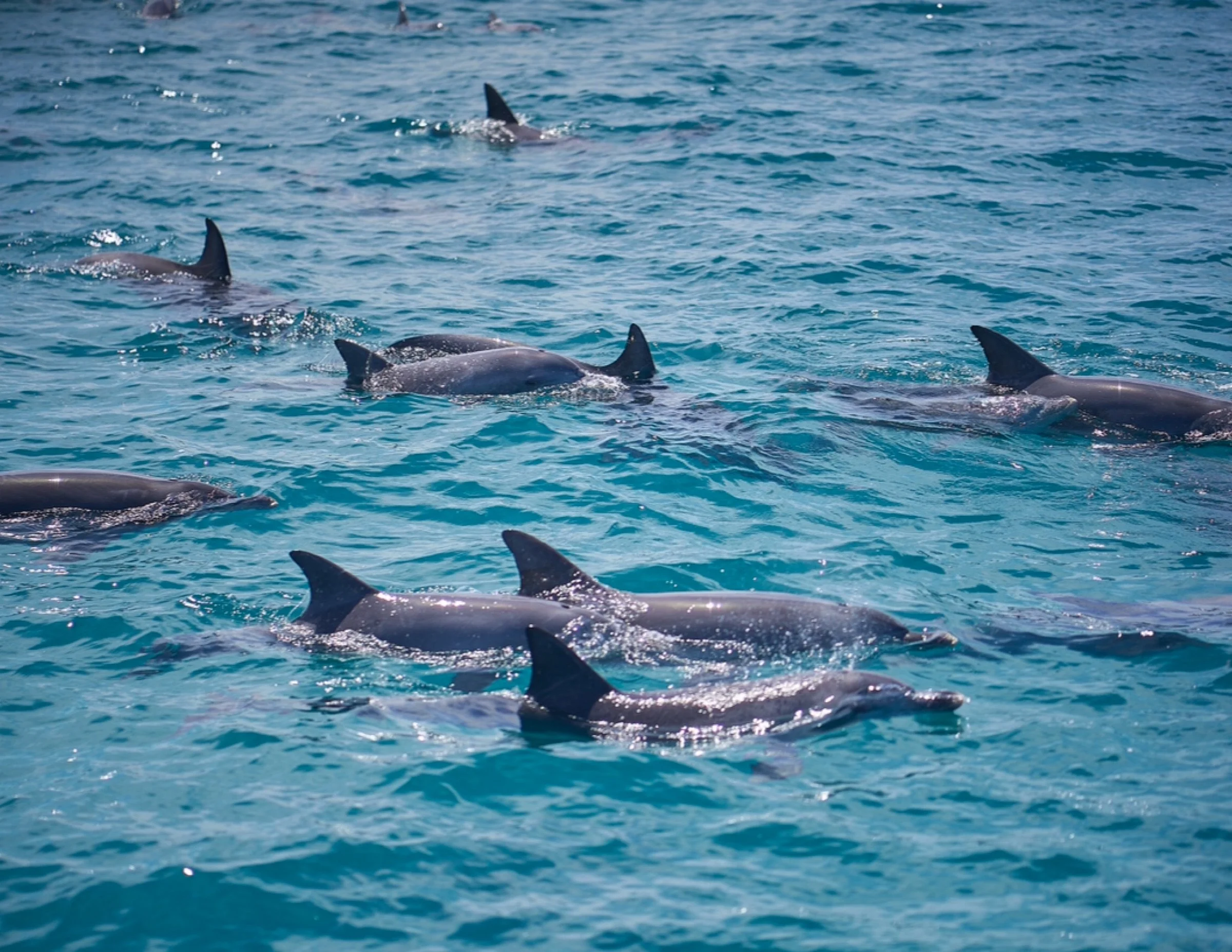
Seeing an Indo-Pacific bottlenose dolphin in the wild is an unforgettable part of exploring the Jurien Bay Marine Park. Dolphins may be encountered travelling between islands, feeding near reefs, socialising or moving through seagrass habitats.
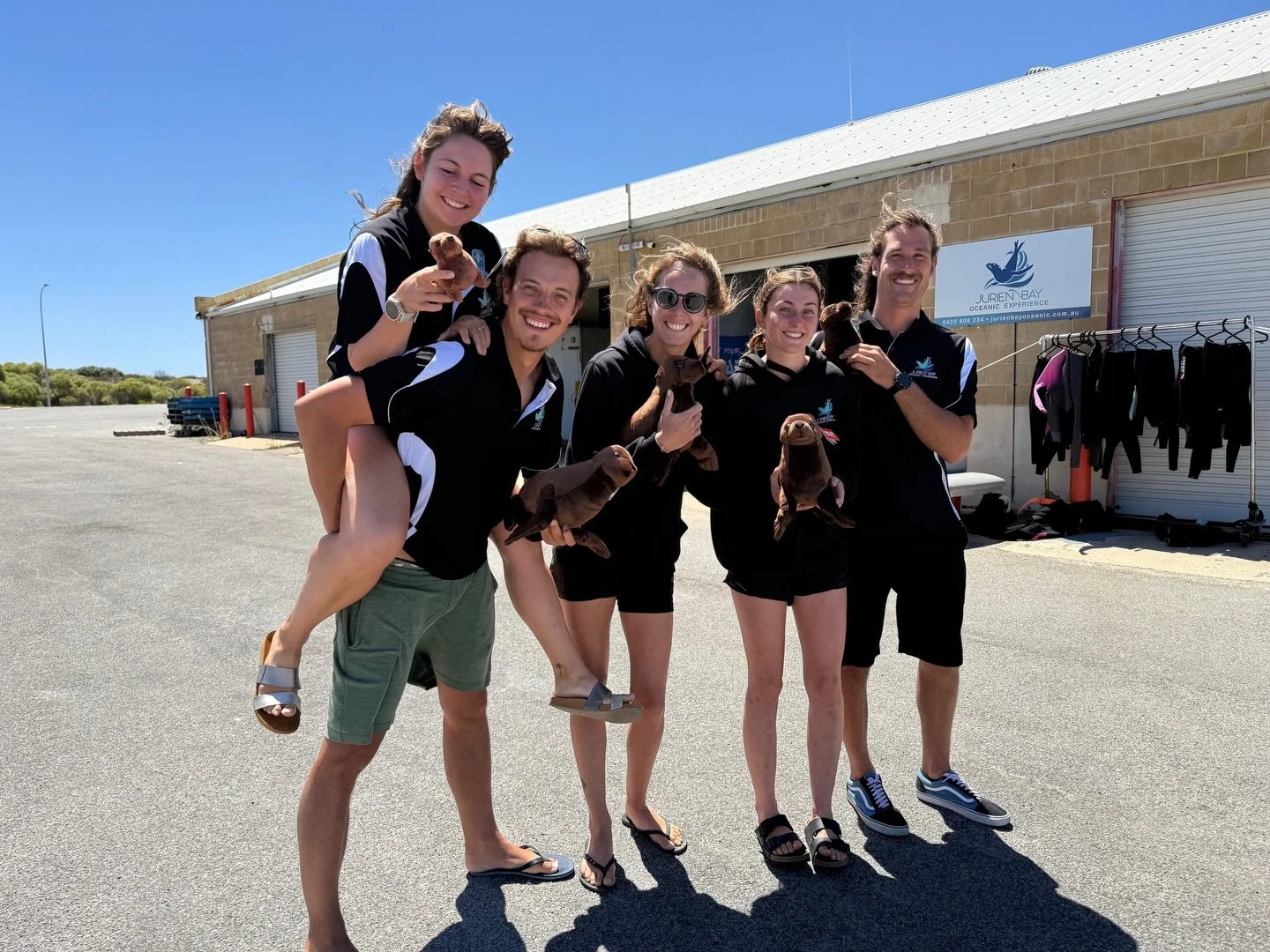
Jurien Bay Oceanic Experience has spent generations exploring these waters and sharing the Marine Park with visitors. Our experienced local crew provides insights into the wildlife, habitats and conservation stories that shape this coastline.
Our tours offer the opportunity to discover the wider Marine Park and the native wildlife that calls it home. All animals remain completely wild, and dolphin sightings cannot be guaranteed.
Join us on the water and experience the incredible marine environment of Jurien Bay.
Continue Exploring Our Marine Wildlife Guides
@jurienbayoceanic