Home > Marine Hub > Marine Wildlife > Whales of Western Australia
Whales
of Western Australia
────────────
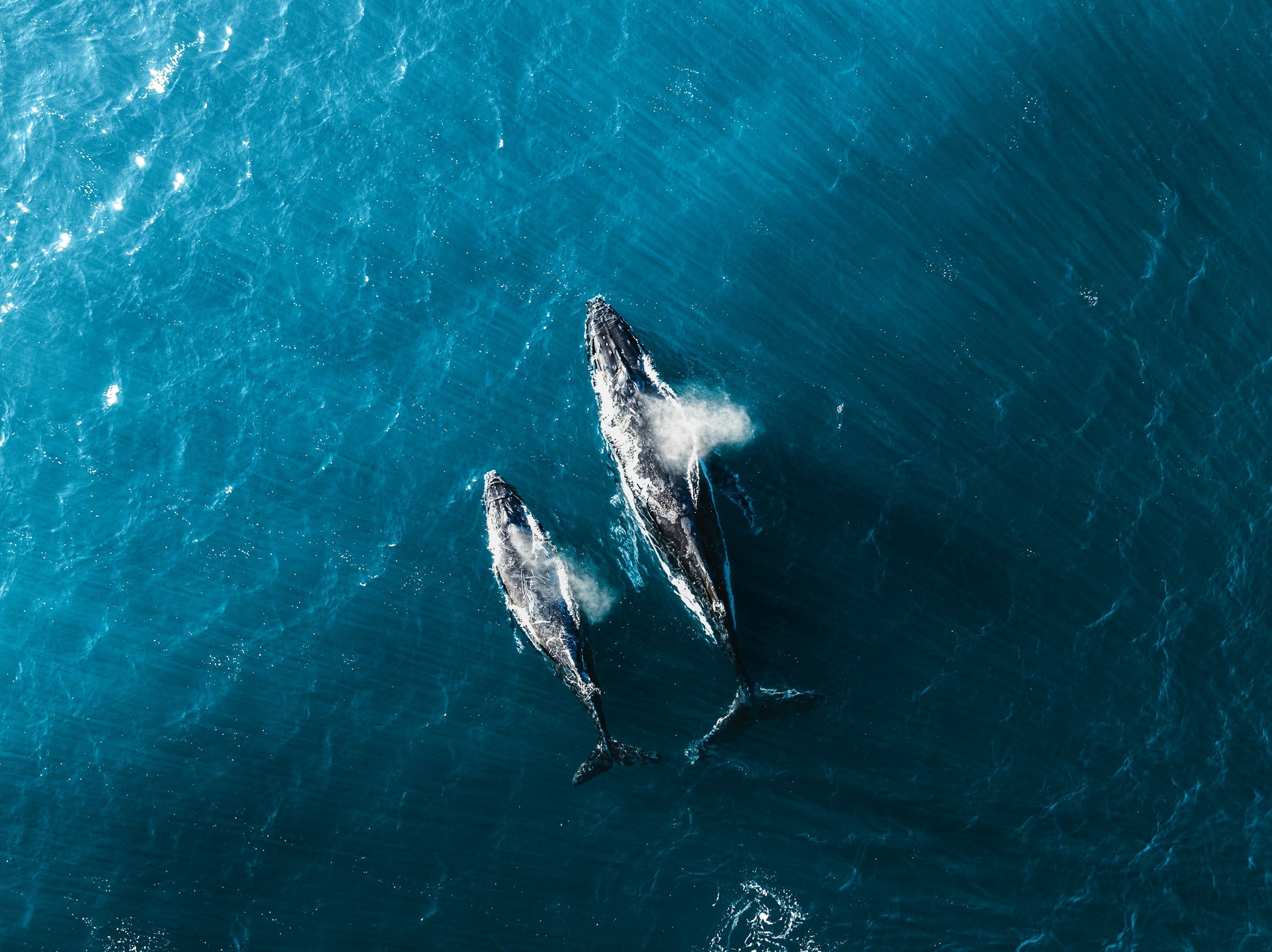
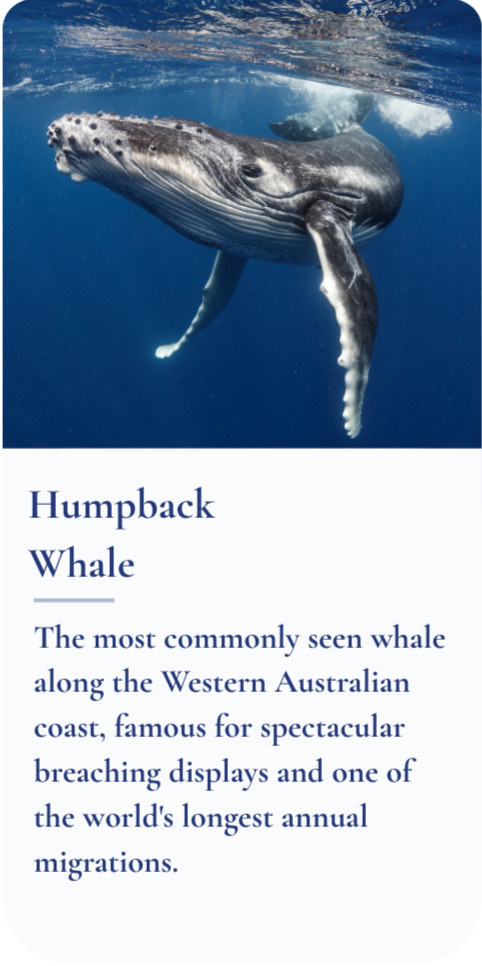
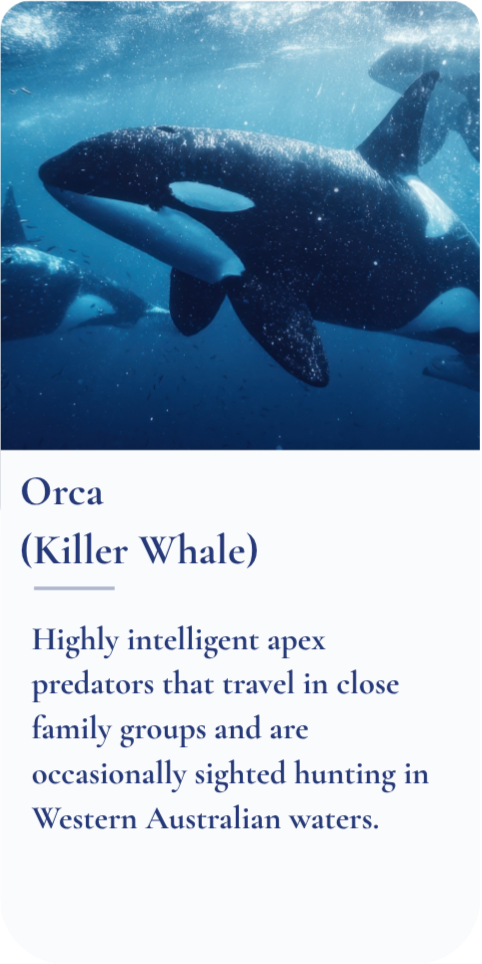
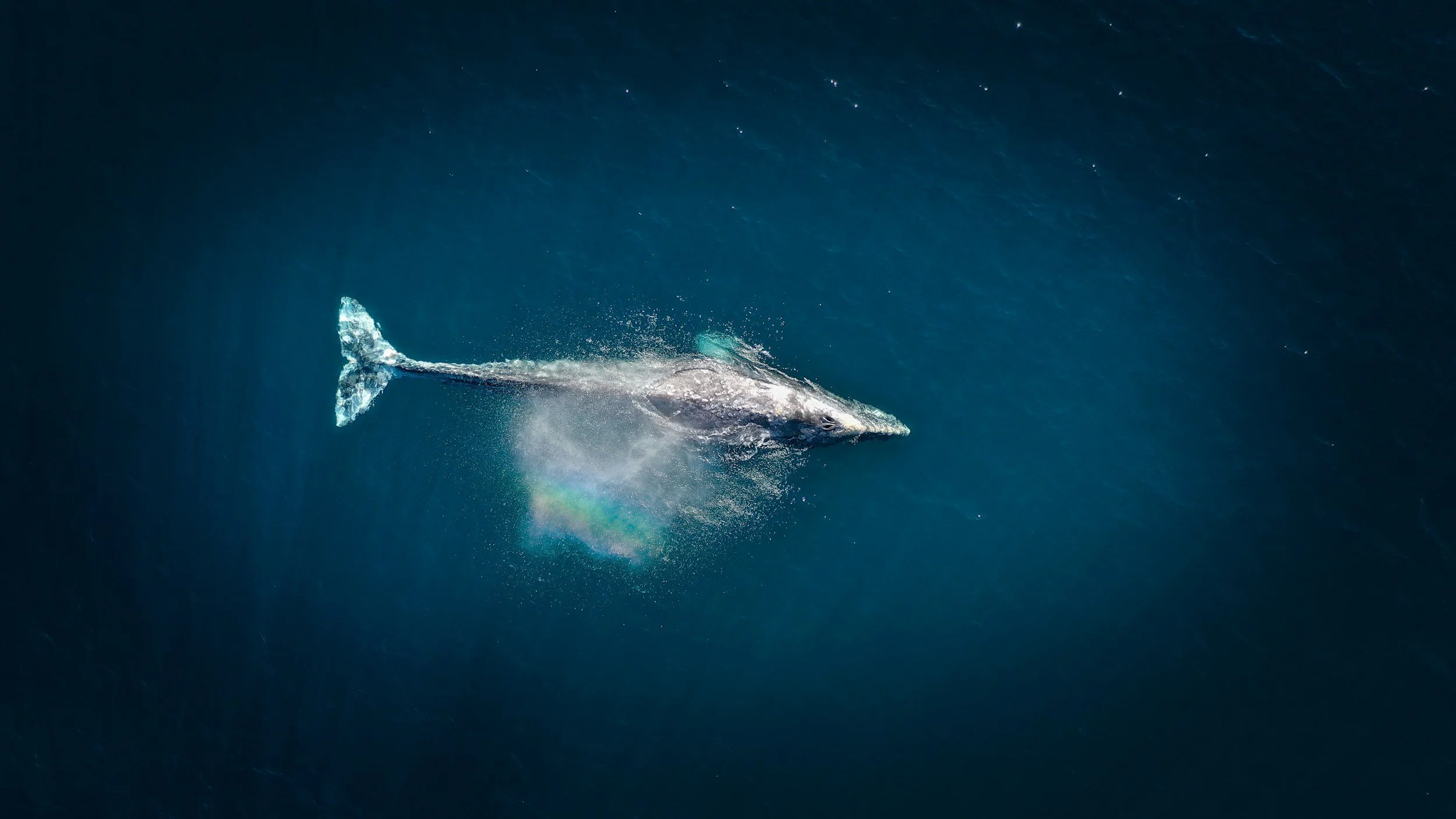
Whales travel through Western Australian waters during seasonal movements between feeding, breeding and calving areas. Humpback whales are the species most often seen along the Coral Coast, including offshore from Jurien Bay. Southern right whales, pygmy blue whales and orcas also occur in Western Australian waters.
This guide covers the species found along the coast, their migration patterns, their ecological role and the principles of responsible whale viewing.
Last updated 11 August 2026.
Based on over six decades of experience exploring the wildlife of the Jurien Bay Marine Park.
Local knowledge. Real experience. Trusted information.
The Giants of Western Australia’s Coast
────
1 . Why Do Whales Migrate Along Western Australia’s Coastline?
────
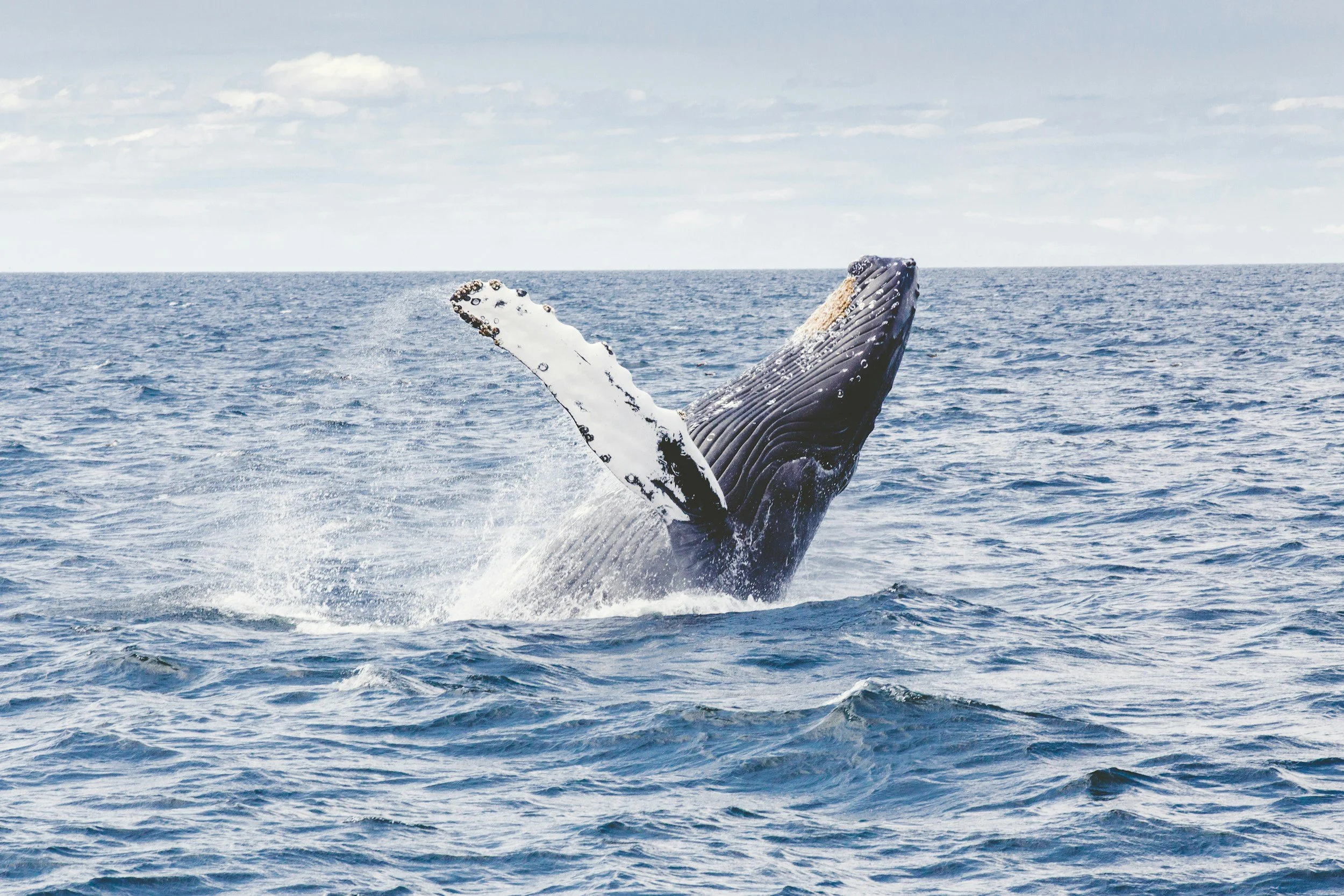
Several whale species use Western Australian waters during seasonal movements between feeding, breeding and calving areas. Their routes and timing vary by species.
Humpback whales feed in Antarctic and sub-Antarctic waters during summer. Their stored energy supports a winter migration north to breeding and calving areas off northern Western Australia. Adults and calves travel south towards their feeding grounds in spring.
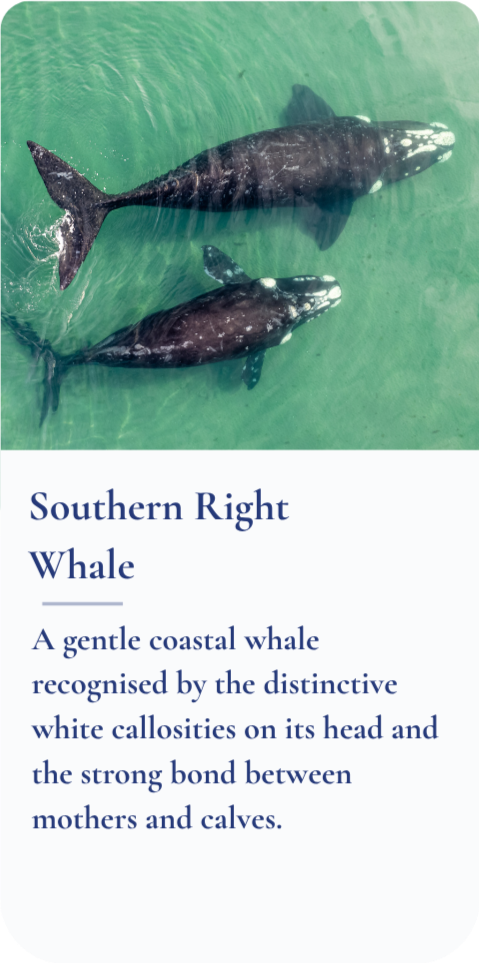
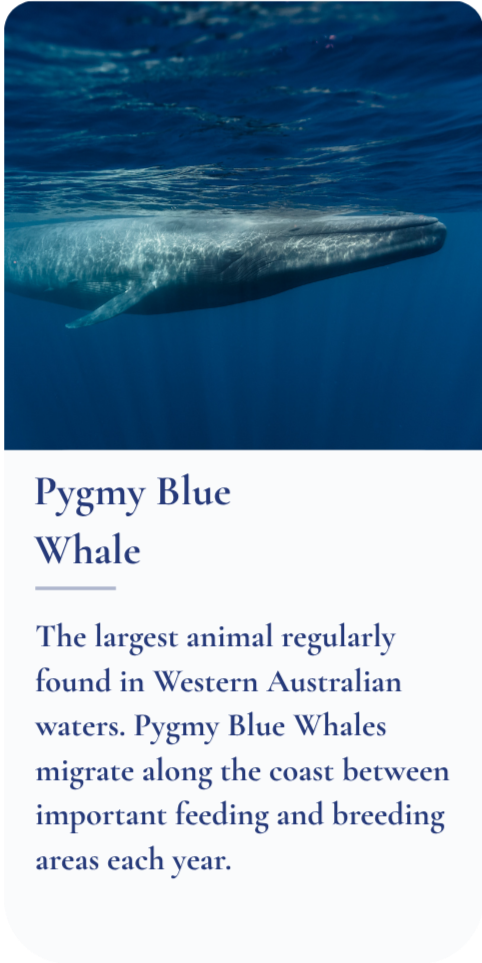
Southern right whales move into shallow, sheltered waters along southern Australia during the cooler months to mate, calve and nurse. Pygmy blue whales travel along the west coast between productive feeding areas off southern Western Australia and warmer waters farther north. Orca movements are closely linked to prey and are less seasonally predictable.
Around Jurien Bay, humpback whales are most often recorded during the southward migration, generally from late July to November. The timing changes with seasonal conditions and individual animals.
2. Katy, Our Whale Whisperer
────
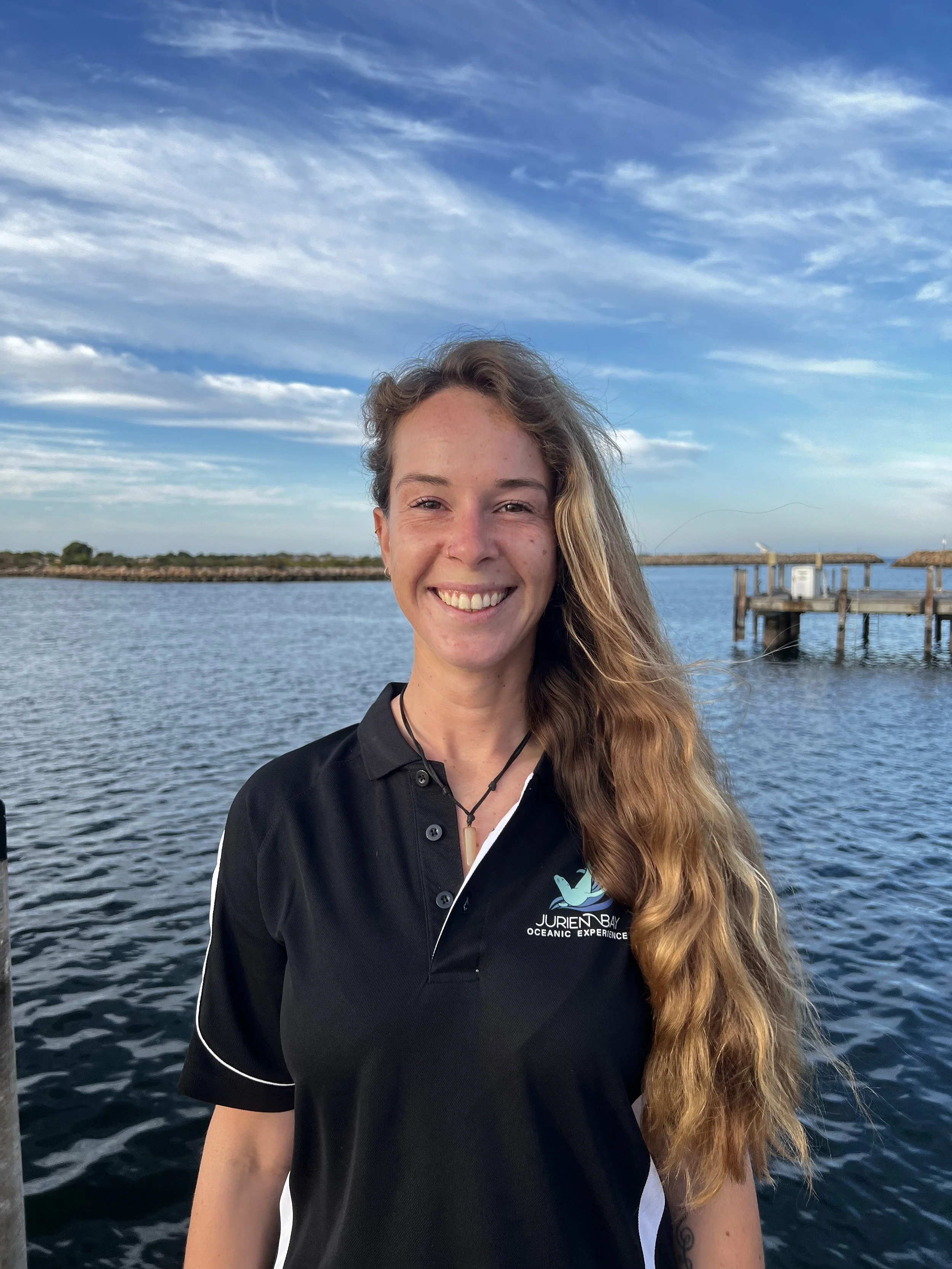
Katy Fannei is the marine biologist at Jurien Bay Oceanic Experience. Her research focuses on southern right whale distribution, breeding habitat and conservation in Western Australia.
In 2026, Katy and her co-authors published a peer-reviewed study in Marine Mammal Science. The study analysed 94 weekly aerial surveys conducted from May to November between 2021 and 2024 along 450 kilometres of Western Australia’s southern coastline.
The surveys recorded 5,899 individual whale sightings. Mother–calf pairs made up 72% of the observations. The research identified four key aggregation areas at Cheynes Beach, Cheyne Bay, Wray Bay and Doubtful Island Bay. Whales were present from late May to early November, with peak abundance recorded in mid to late August.
These findings provide current evidence for the conservation of southern right whale reproductive habitat. Katy’s research also adds peer-reviewed expertise to the information shared through the Marine Hub.
Read Katy's published research here.
3 . Why Whales Matter
────
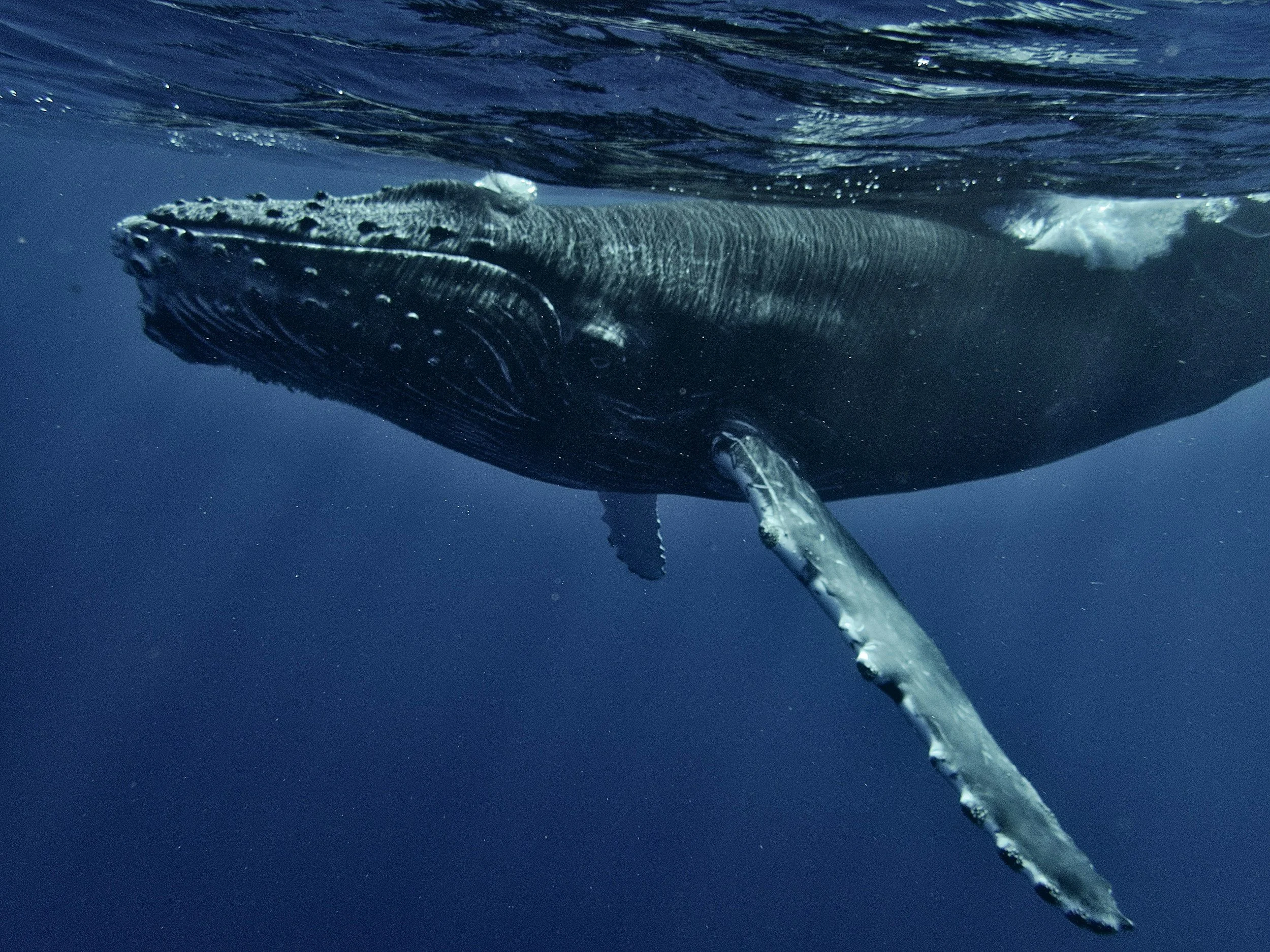
Whales can influence ocean nutrient cycling through feeding, diving and the release of nutrient-rich waste. This movement can make nutrients available to phytoplankton and other organisms at the base of marine food webs. Whale carcasses also transfer organic matter to deep-sea communities.
Population recovery differs by species. Australian humpback whale populations have recovered substantially since commercial whaling ended. Southern right whales and blue whales remain listed as endangered under Australian law.
Current threats include entanglement, vessel strikes, underwater noise, habitat change and climate-related shifts in prey and ocean conditions. Protecting feeding areas, breeding and calving habitat, and migration routes supports whale conservation across Western Australia.
4 . Responsible Whale Viewing
────
Whales are protected throughout Australian waters. In Western Australian State waters, vessels must not approach within 100 metres of a whale. Vessels within 300 metres must approach from the side, keep clear of the whale’s path and avoid separating a group. If a whale moves within 100 metres, the skipper must place the motors in neutral or move away slowly until the required distance is restored. The interaction must end if the animal shows signs of disturbance.
Humpback whales pass offshore from Jurien Bay during their seasonal migration. The most reliable local period is generally late July to November, particularly during the southward journey. Sightings can occur from the coast and offshore. They cannot be guaranteed because migration timing, weather and sea conditions vary.
Jurien Bay Oceanic Experience follows the required approach distances and keeps disturbance to a minimum around travelling, resting and nursing whales. The animals are given space to continue their natural behaviour.
-
Whale migration can be observed around Western Australia from approximately May to December. Exact timing depends on the region and species. Around Jurien Bay, humpback whales are most often seen from late July to November during their southward migration.
-
Yes. Humpback whales migrate through offshore waters around Jurien Bay and the Jurien Bay Marine Park. They may be seen from boats, beaches and coastal lookouts during the migration season. Weather, sea conditions and migration timing affect sightings, so encounters cannot be guaranteed.
-
Many large baleen whales move between productive feeding grounds and breeding or calving areas. Humpback whales travelling along Western Australia feed in Antarctic and sub-Antarctic waters, migrate north during winter and travel south with their calves in spring. Other whale species follow different routes and seasonal patterns.
-
Humpback whales are the species most often seen during migration along much of the Western Australian coast. Southern right whales are regularly recorded along the south coast. Pygmy blue whales use west-coast waters, and orcas are well known from offshore waters near Bremer Bay. Species and timing vary by region.
Frequently Asked Questions
EXPERIENCE THE MARINE WILDLIFE OF WESTERN AUSTRALIA
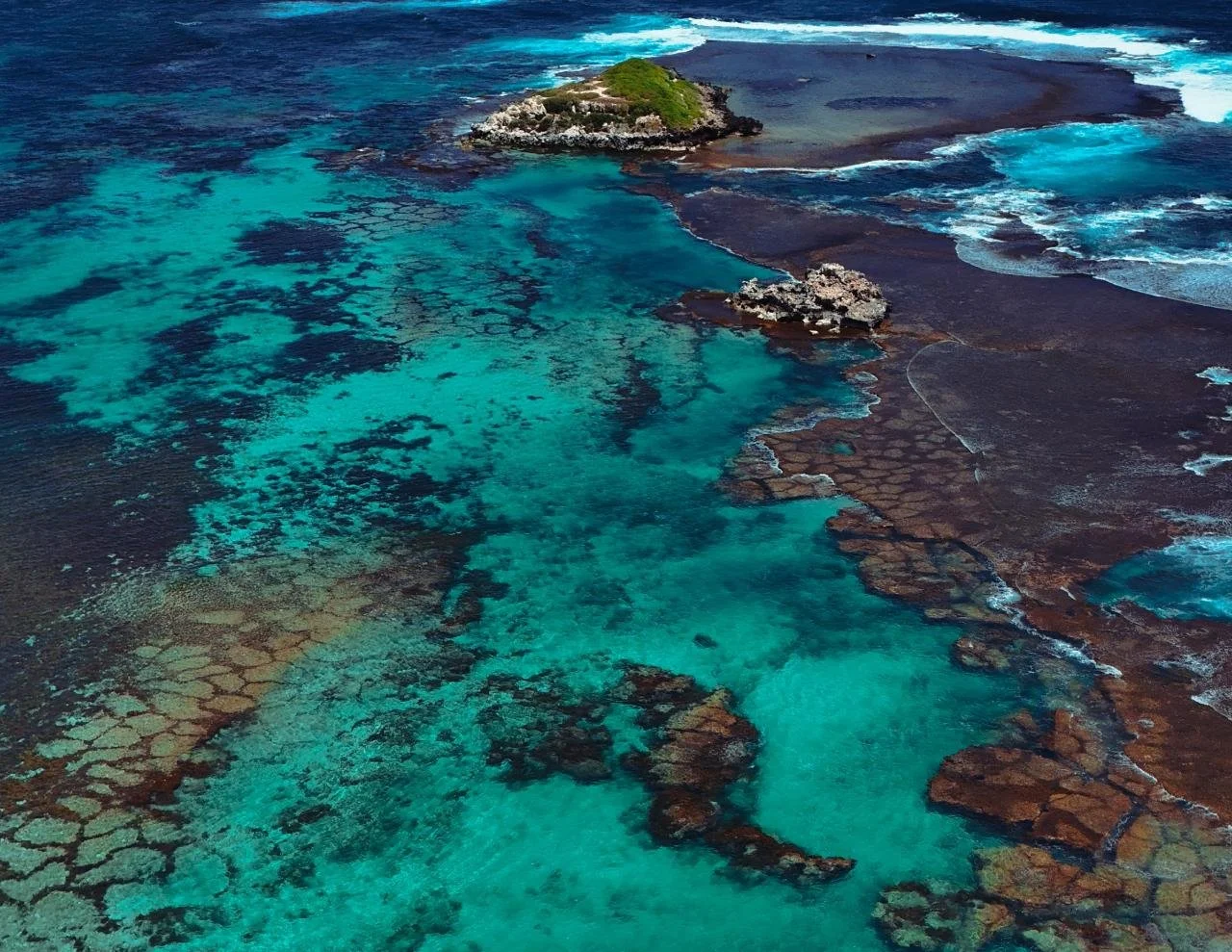
Western Australia’s coast supports humpback whales, Australian sea lions, Indo-Pacific bottlenose dolphins, seabirds and diverse reef fish.
Jurien Bay Oceanic Experience has spent decades exploring the Jurien Bay Marine Park and sharing its wildlife, habitats and natural history. Explore our Jurien Bay tours and experience the Coral Coast with an experienced local crew.
Continue Exploring Our Marine Wildlife Guides
@jurienbayoceanic