Home > Marine Hub > Australian Sea Lion Guides > Sea Lions vs Seals
Sea Lions
vs
Seals
Although they may look similar at first glance, sea lions and seals are very different animals. From the way they move on land to how they swim, communicate and behave, there are several easy ways to tell them apart.
Whether you're planning to swim with Australian sea lions in Jurien Bay or you're simply curious about marine wildlife, this guide explains the key differences between seals and sea lions and how to identify them in the wild.
Last Updated 10 August 2026
Based on thousands of guided sea lion encounters in the Jurien Bay Marine Park.
Local knowledge. Real experience. Trusted information.
What’s the Difference Between Sea Lions & Seals?
Sea lions and seals both belong to the pinniped family, a group of marine mammals adapted for life in the ocean. While they share many similarities, they have evolved differently and display distinct physical features and behaviours.
Australian sea lions belong to the eared seal family, while many true seals belong to the earless seal family. Once you know what to look for, telling them apart becomes surprisingly easy.
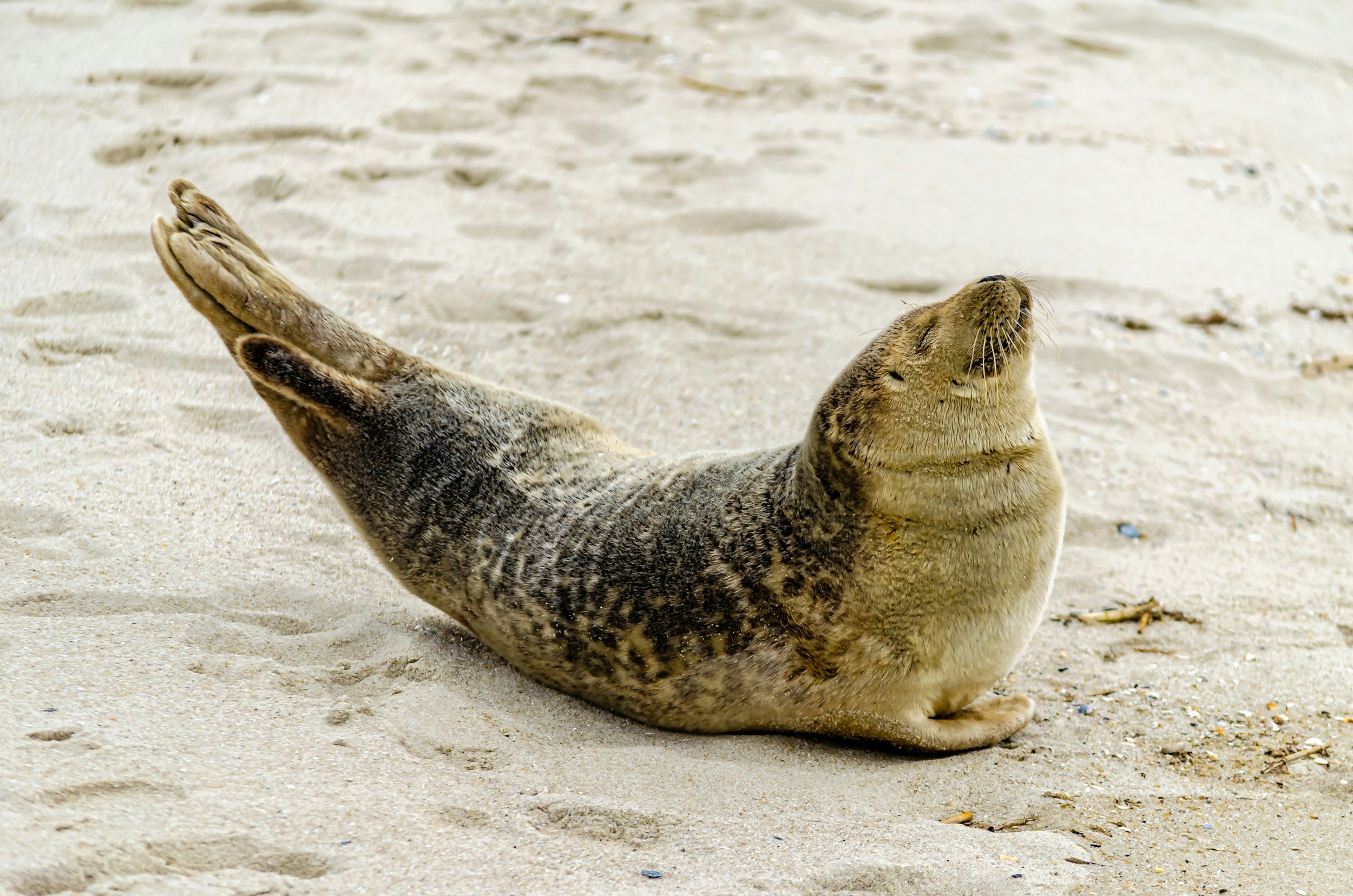
Seal
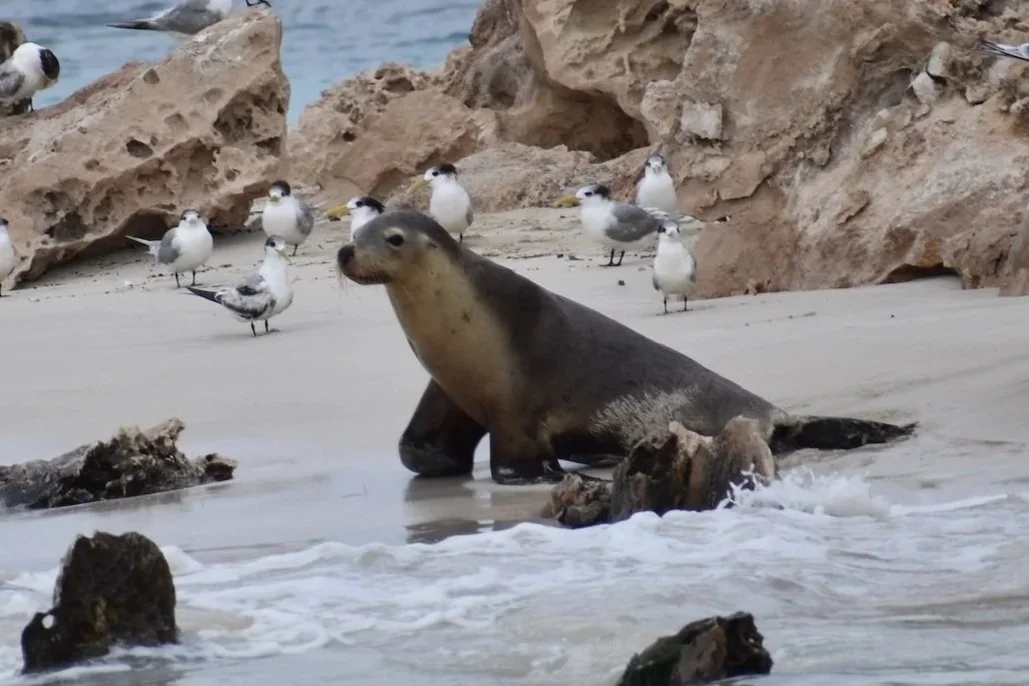
Sea lion
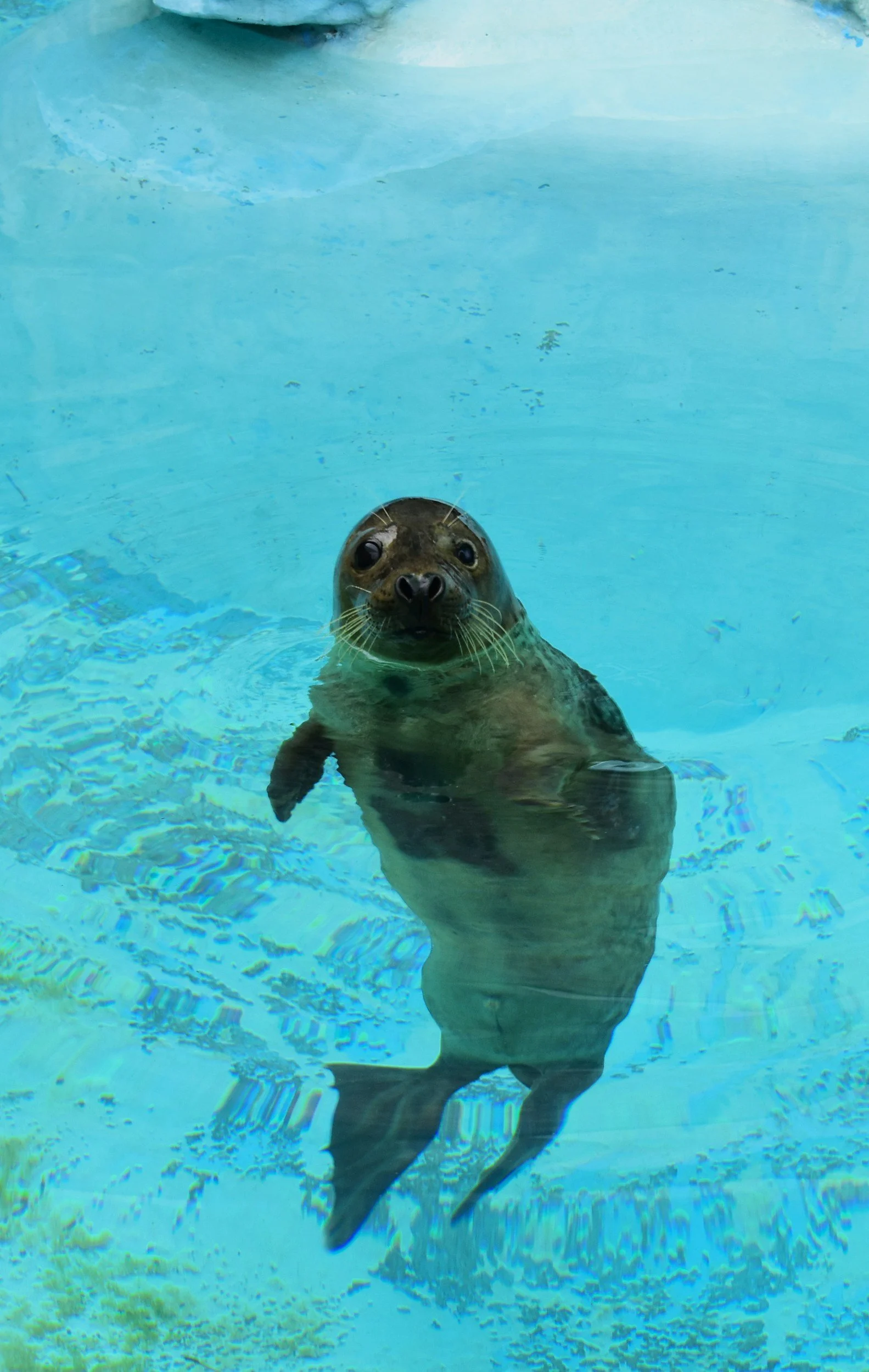
Seal
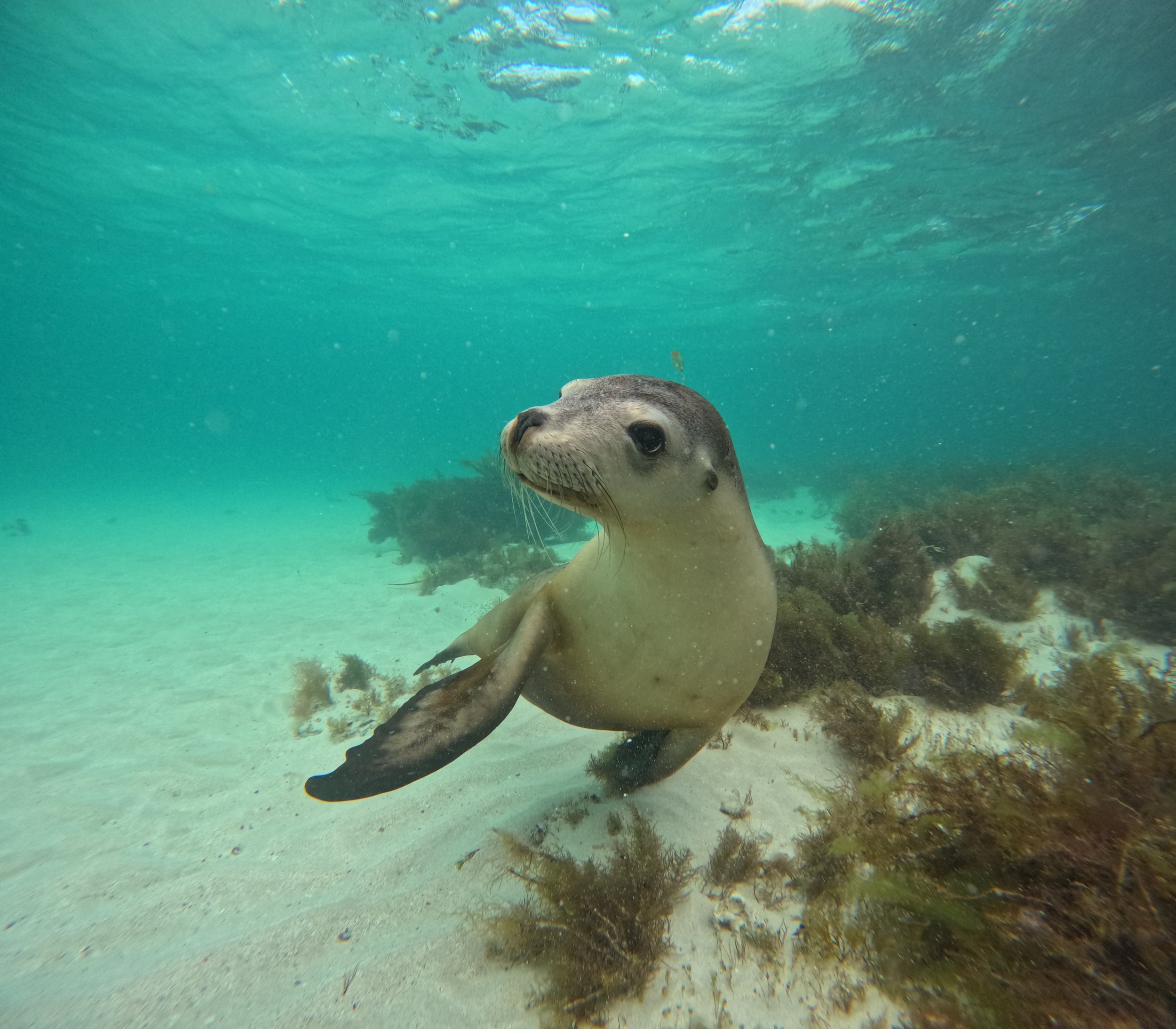
Sea Lions Have Visible Ears
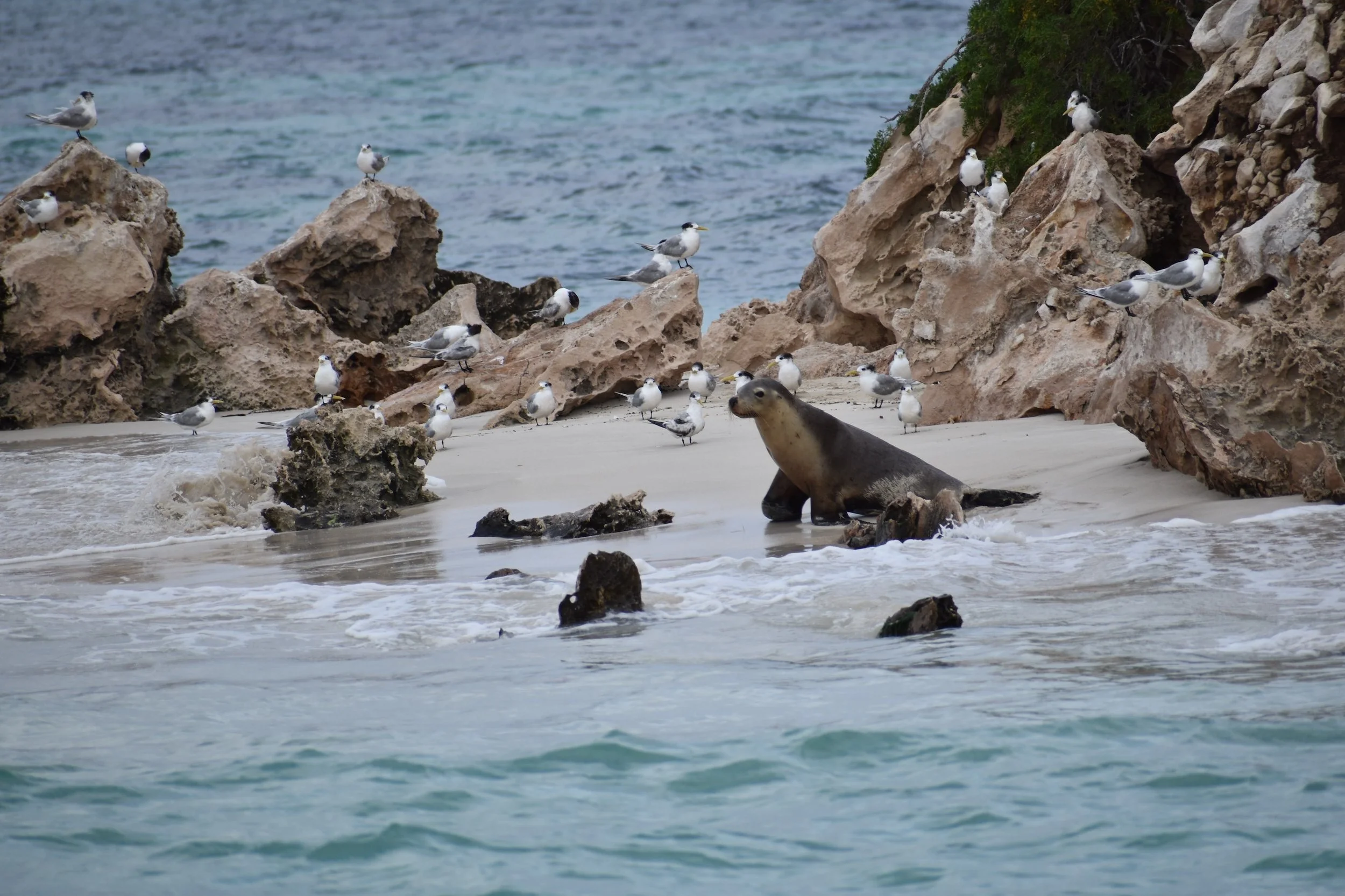
One of the easiest ways to identify a sea lion is by looking for its small external ear flaps.
Unlike true seals, which have small ear openings but no visible ears, sea lions have noticeable ear flaps located just behind their eyes.
It's a simple feature that wildlife guides often point out first.
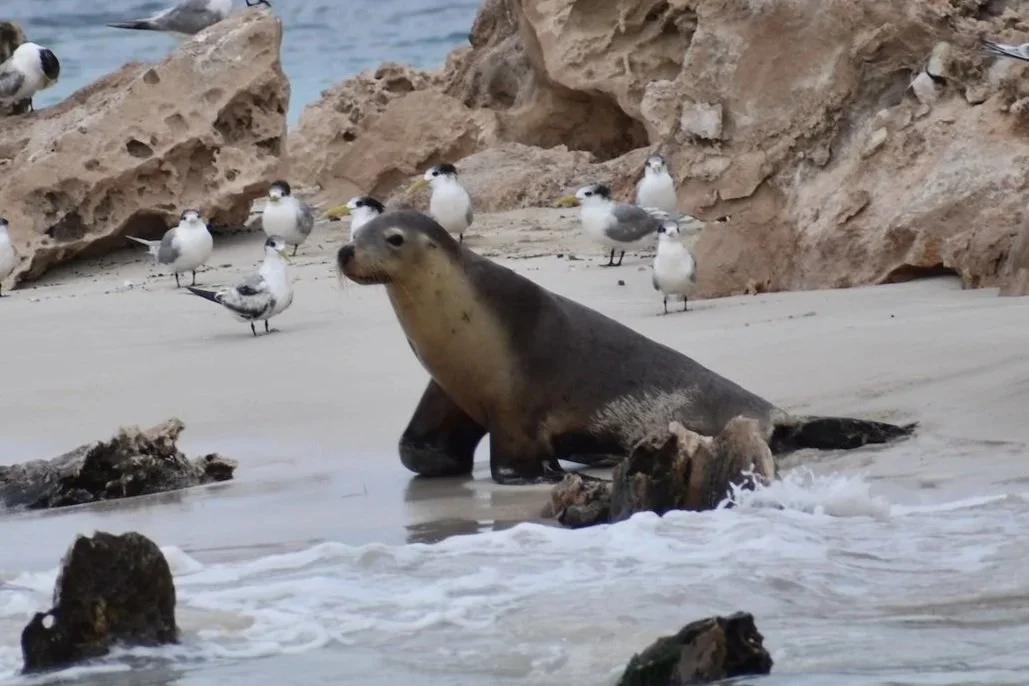
Sea Lions Walk, While Seals Shuffle
Sea lions are surprisingly agile on land.
Their large front flippers allow them to rotate their back flippers underneath their bodies, enabling them to walk or even run across rocks and beaches.
Seals cannot rotate their back flippers in the same way. Instead, they move by wriggling or shuffling across the ground using their stomachs and front flippers.
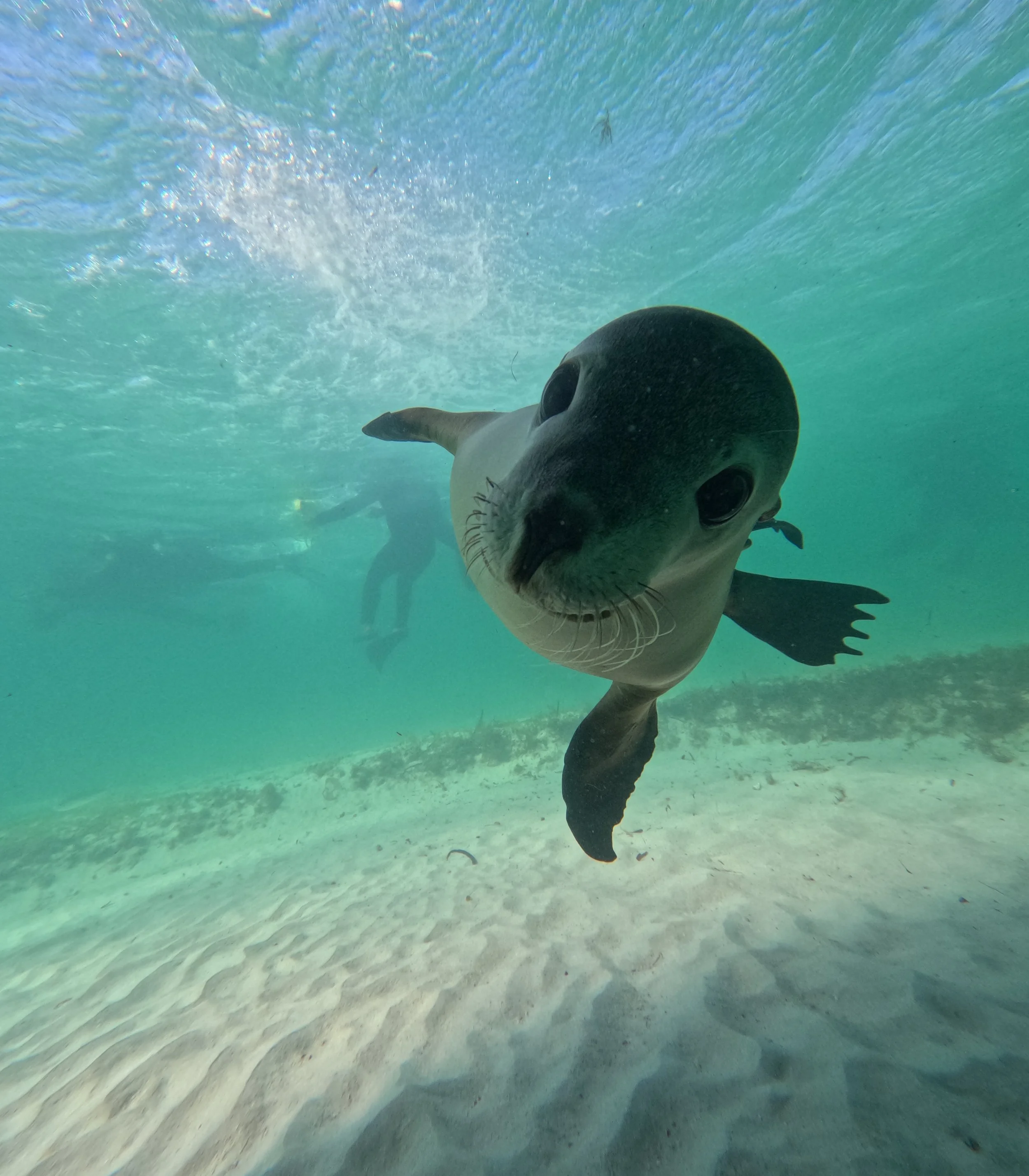
Sea Lions Swim Differently
Sea lions use their powerful front flippers like wings, flying gracefully through the water with strong, controlled strokes.
Seals rely mainly on their back flippers and move with side-to-side body motions, giving them a very different swimming style.
This graceful underwater movement is one of the reasons Australian sea lions are such incredible animals to snorkel with.
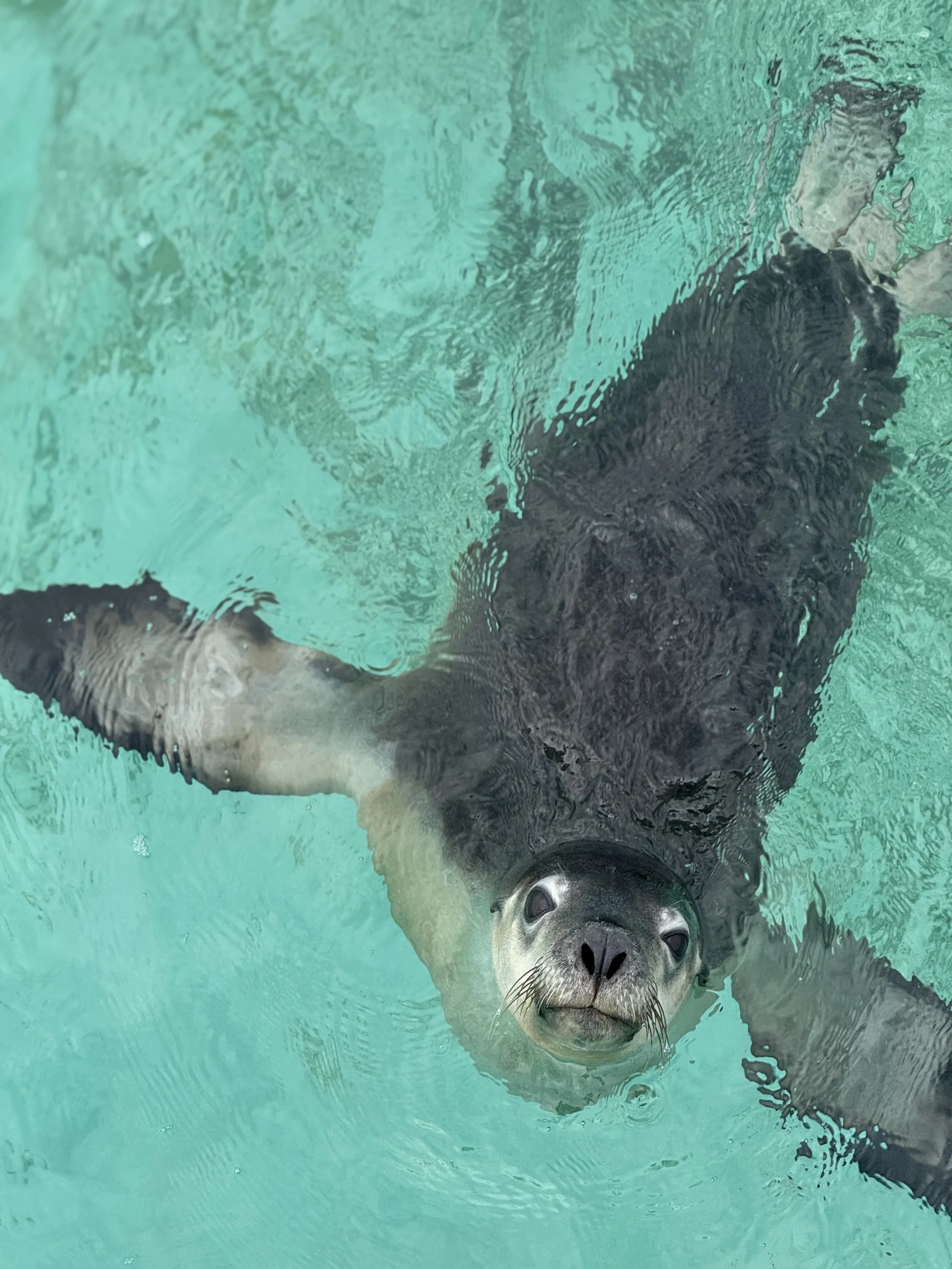
Sea Lions Are Naturally Curious
Australian sea lions are well known for their playful and inquisitive nature.
Juveniles often approach snorkellers, investigate bubbles and swim playful circles around visitors. Their curiosity makes every wildlife encounter unique.
Many seal species are more cautious around people and are less likely to initiate interactions in the same way.
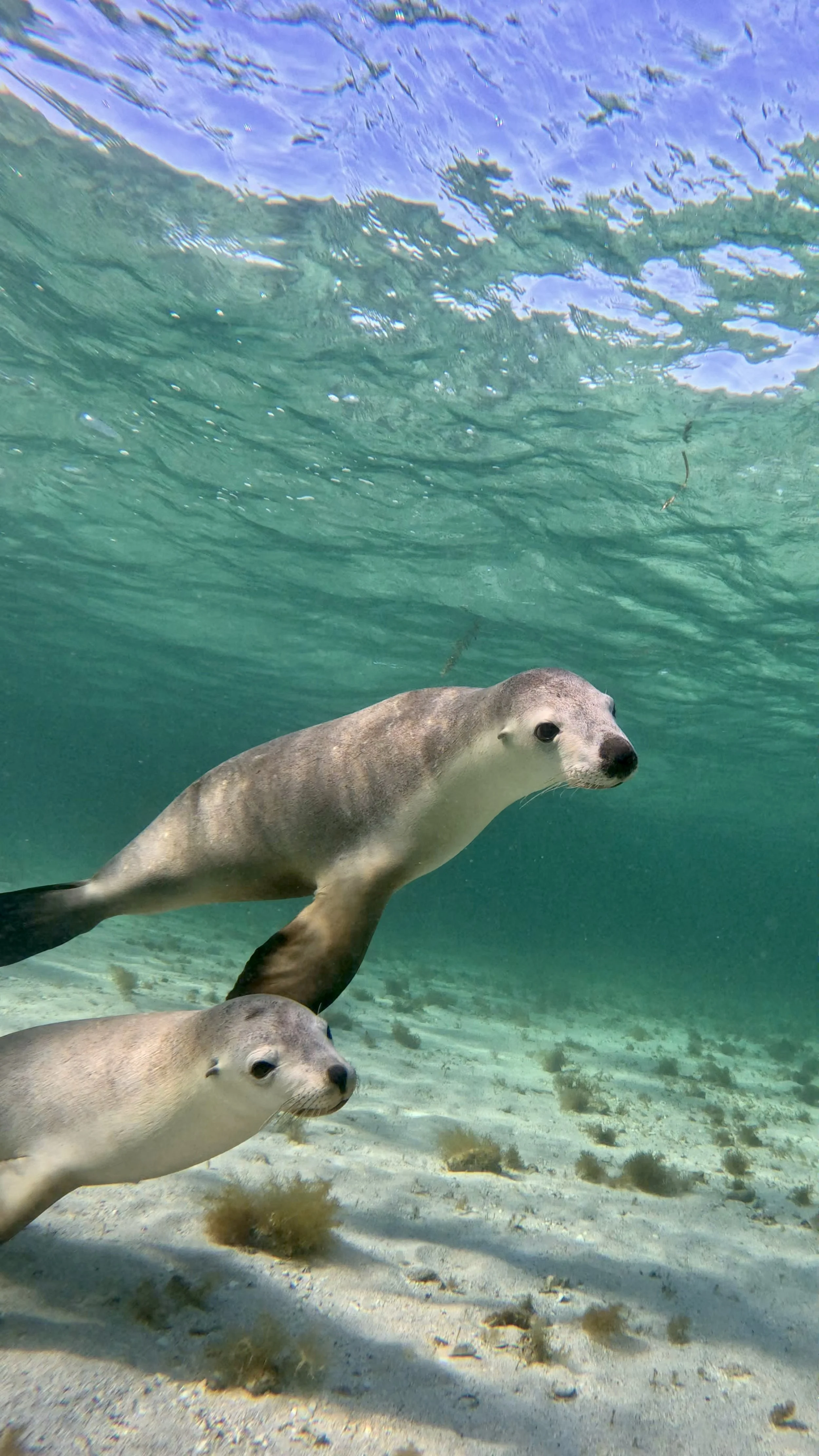
Sea Lions Are More Social
Sea lions spend much of their lives interacting within breeding colonies.
They communicate using vocal calls, body language and playful behaviour, forming strong social bonds between mothers, pups and other colony members.
Although seals also gather in colonies during breeding seasons, many species are generally less social outside these periods.
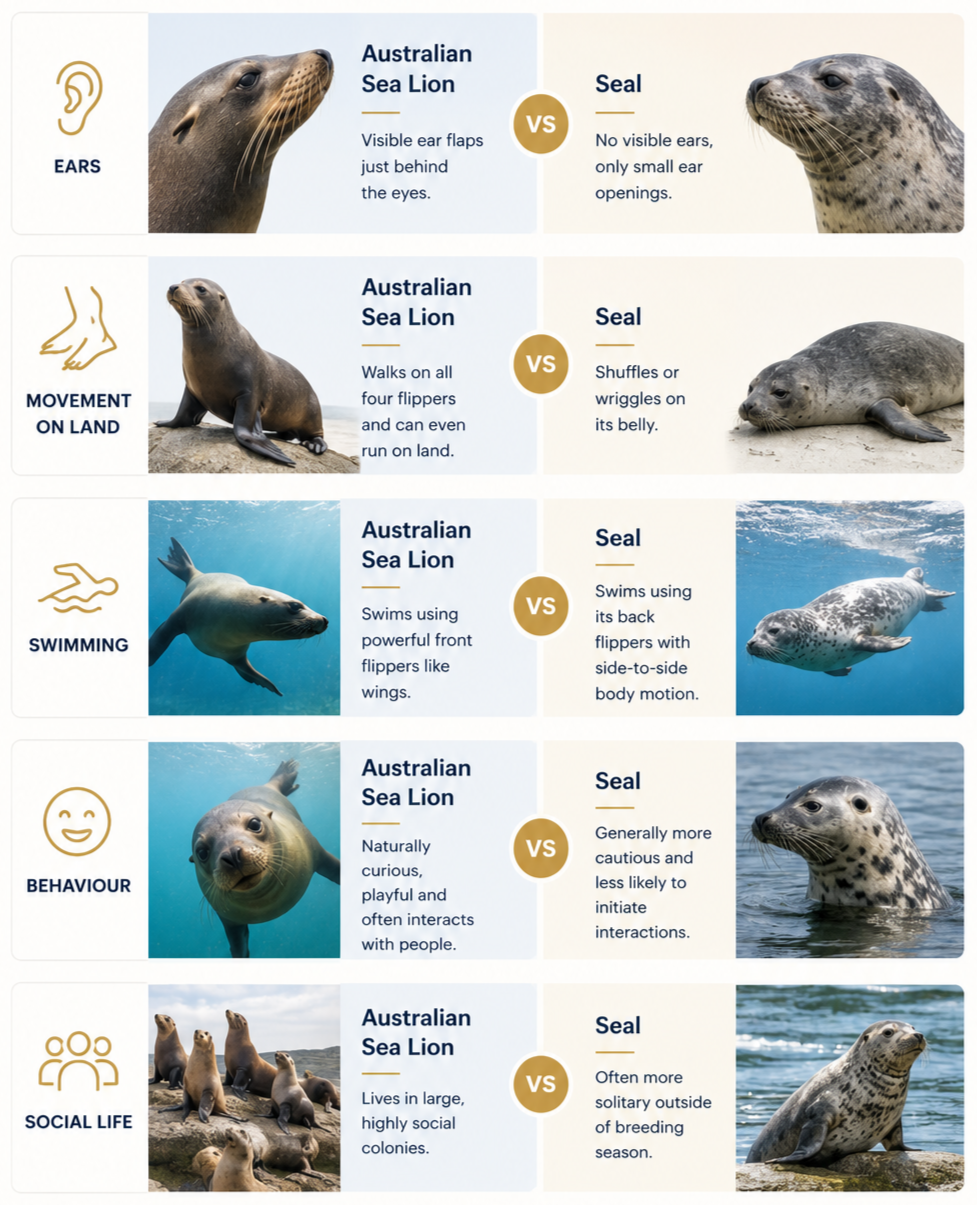
Australian Sea Lions vs Seals Comparison
Why It Matters
Understanding the difference between sea lions and seals helps visitors better appreciate Australia's unique marine wildlife.
Australian sea lions are found nowhere else on Earth, making every encounter in places like Jurien Bay especially memorable. Their intelligence, curiosity and playful behaviour are just some of the qualities that make them one of Australia's most remarkable marine mammals.
Frequently Asked Questions
-
Sea lions have visible ear flaps, walk on all four flippers and swim using their front flippers. Seals have no visible ears, move by shuffling on land and propel themselves through the water with their back flippers.
-
Australian sea lions belong to the eared seal family, meaning they are closely related to seals but are classified as sea lions because of their physical characteristics and behaviour.
-
Sea lions are naturally social and inquisitive animals. Young Australian sea lions often learn through play, chasing, wrestling and investigating their surroundings, making them particularly interactive in the water.
-
Yes. Sea lions have small external ear flaps, one of the easiest ways to distinguish them from true seals.
Continue Exploring Our Australian Sea Lion Guides
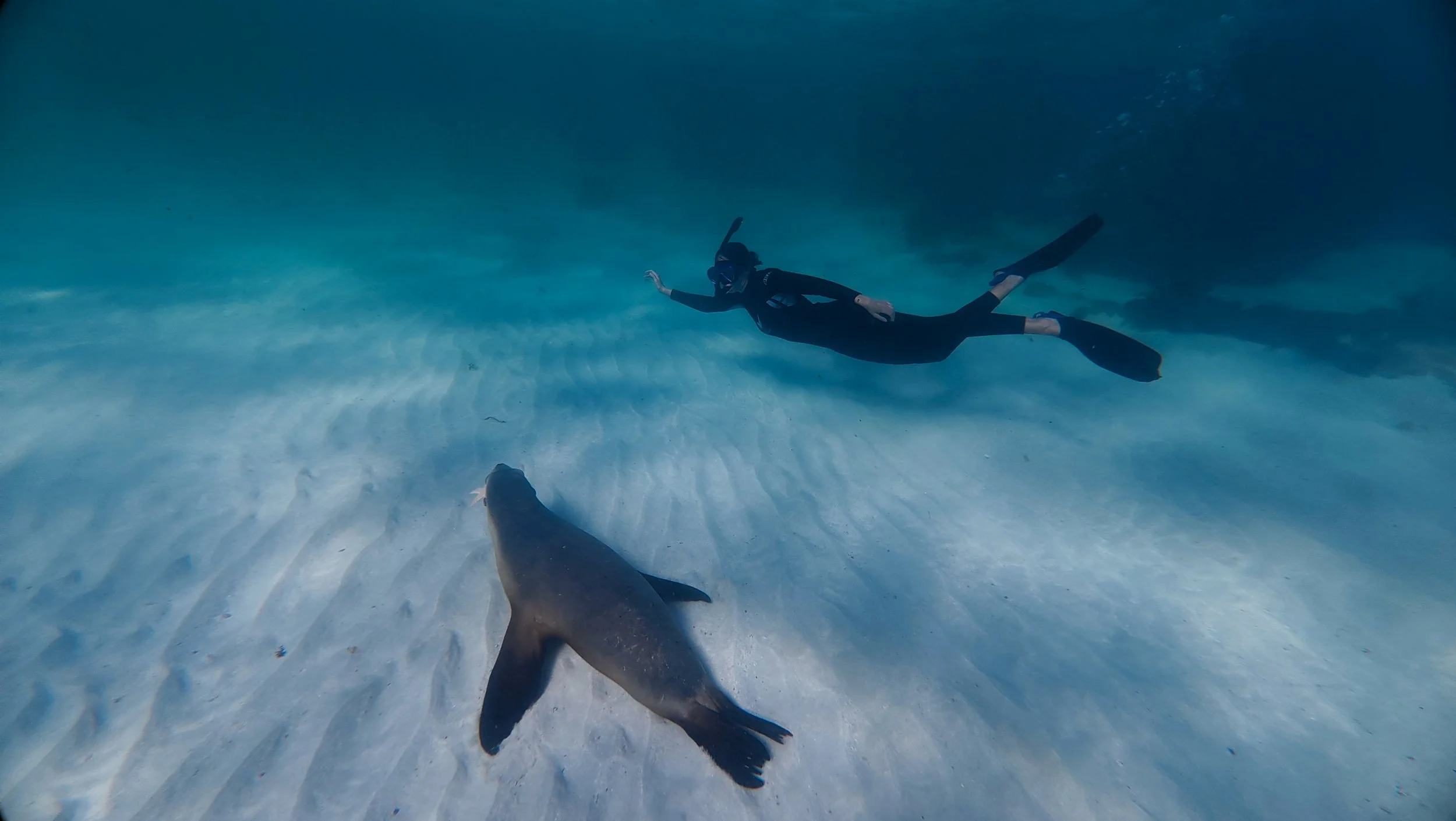
EXPERIENCE AUSTRALIAN SEA LIONS IN THE WILD
Reading about the differences between sea lions and seals is one thing—seeing Australia's only endemic sea lion species in the wild is something you'll never forget.
Join Australia's original Australian sea lion tour operator for a responsible wildlife encounter in the Jurien Bay Marine Park and discover why Australian sea lions are unlike any other marine mammal.
@jurienbayoceanic