Home > Marine Hub > Australian Sea Lion Guides > Australian Sea Lion Behaviour & Social Life
Discover how Australian sea lions communicate, play, rest, hunt and interact within their colonies, and learn why every encounter with these remarkable marine mammals is completely unique.
Australian Sea Lion
Behaviour and Social Life
Last updated 21 July 2026.
Based on thousands of guided sea lion encounters in the Jurien Bay Marine Park.
Local knowledge. Real experience. Trusted information.
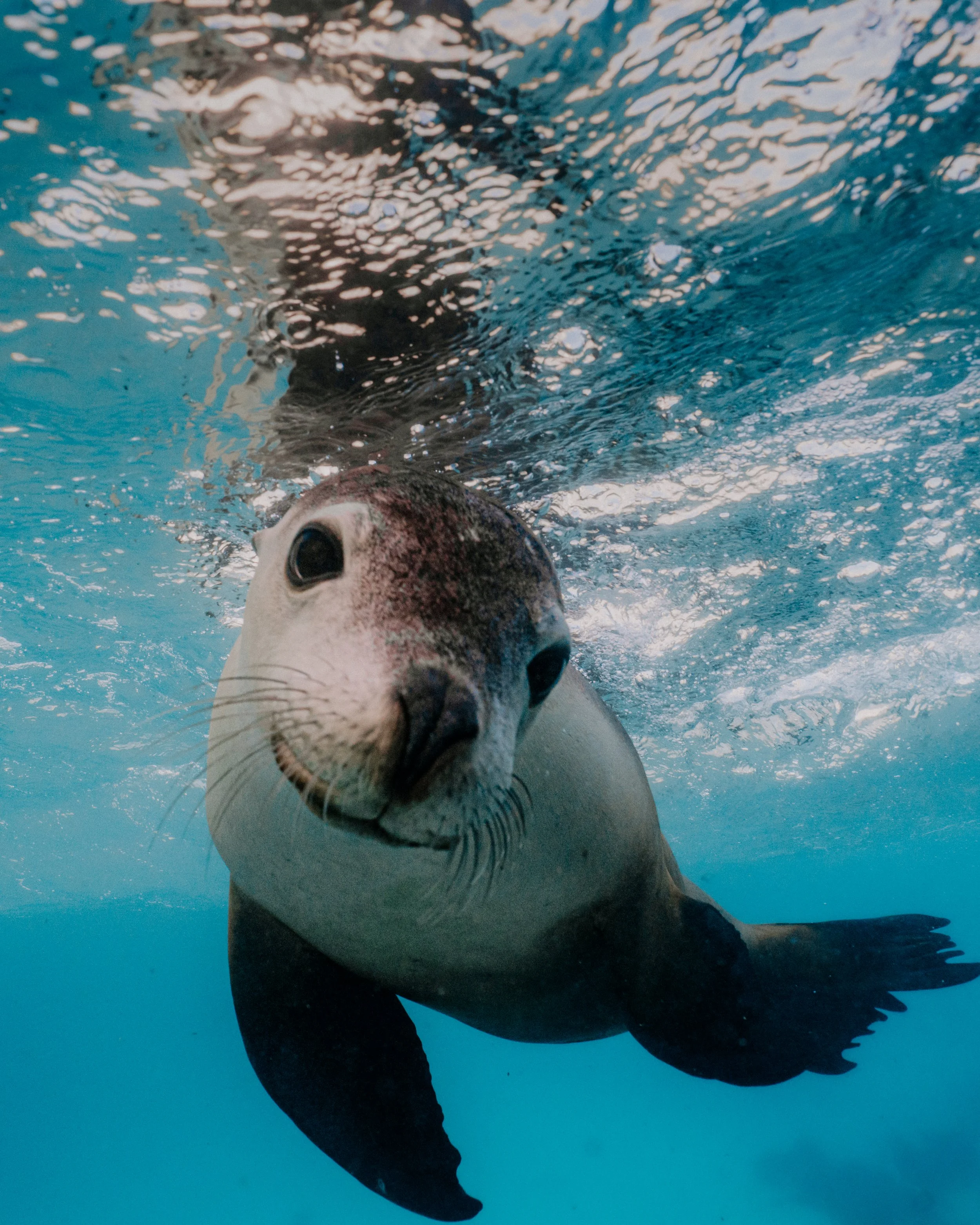
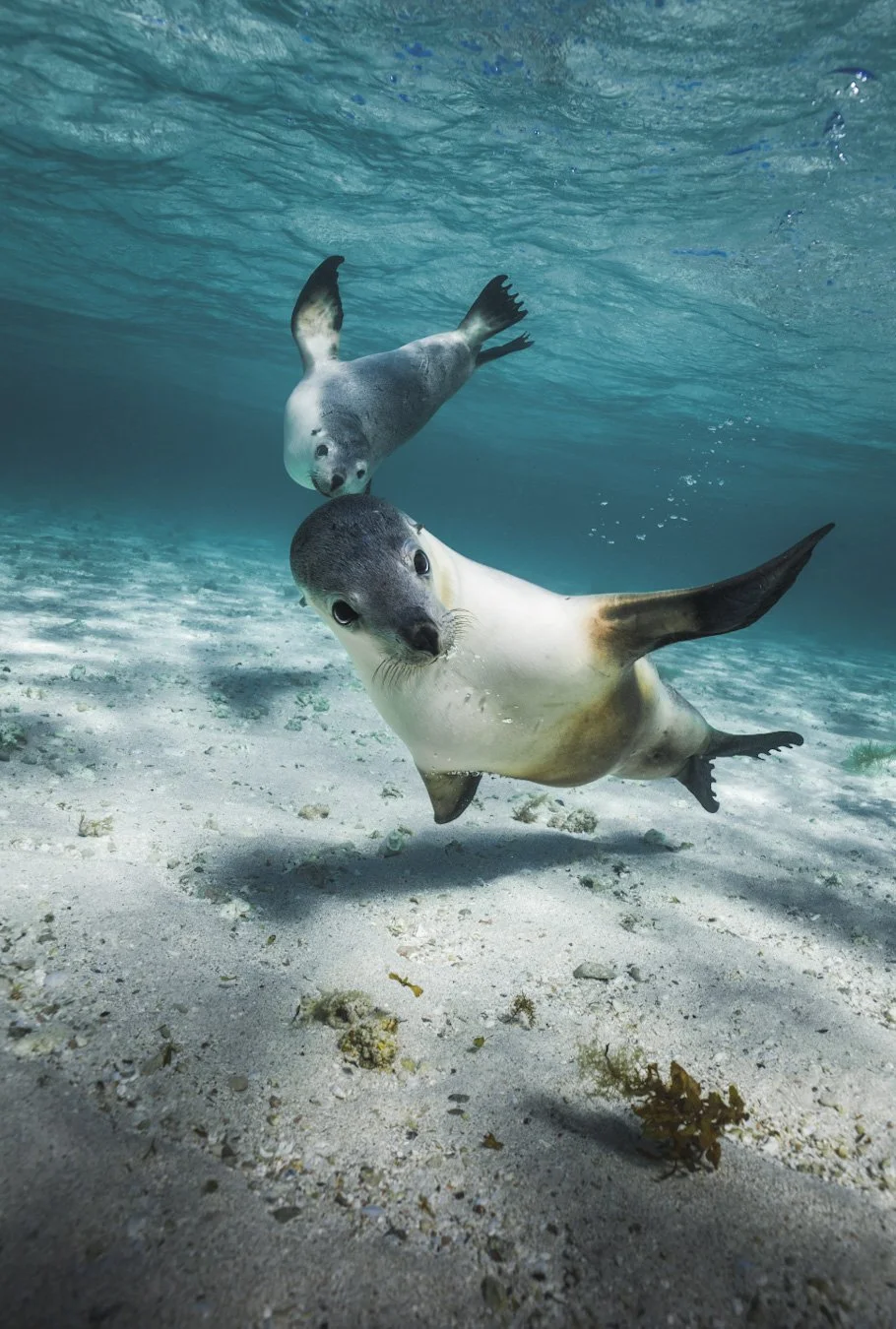
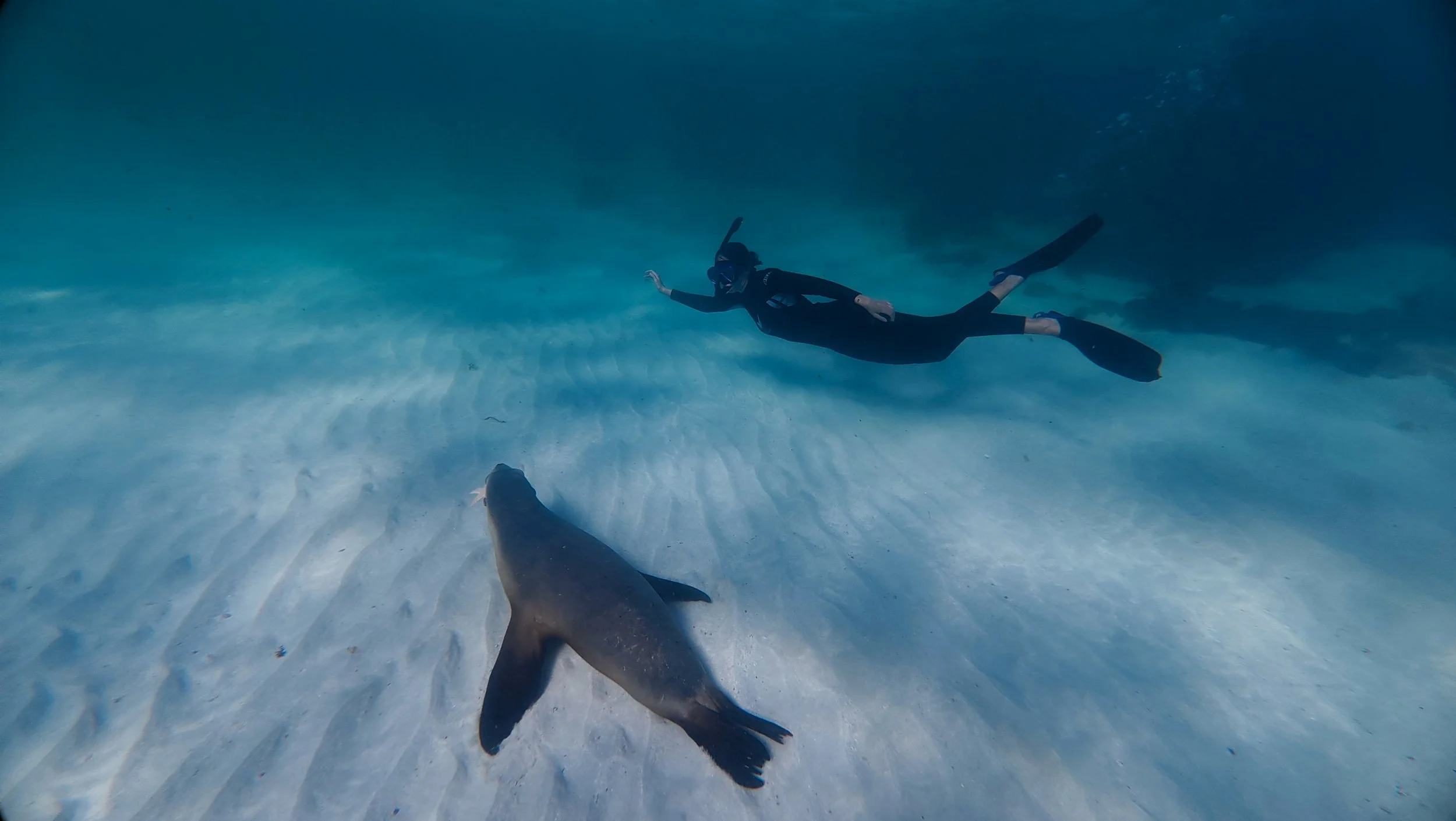
Australian sea lions are among the most inquisitive marine mammals in the world. Unlike many wildlife species that instinctively avoid people, Australian sea lions often choose to investigate divers and snorkellers entirely on their own terms.
This curiosity is a natural behaviour rather than a learned response. Young sea lions, in particular, spend much of their time exploring new objects, practising their swimming skills and interacting with one another through play. Adults are often more reserved but may still quietly approach to observe visitors before continuing on their way.
Because every sea lion has its own personality, no two encounters are ever the same. Some individuals are playful and energetic, while others are relaxed, cautious or simply content watching from a distance.
Australian Sea Lions Are Naturally Curious
────
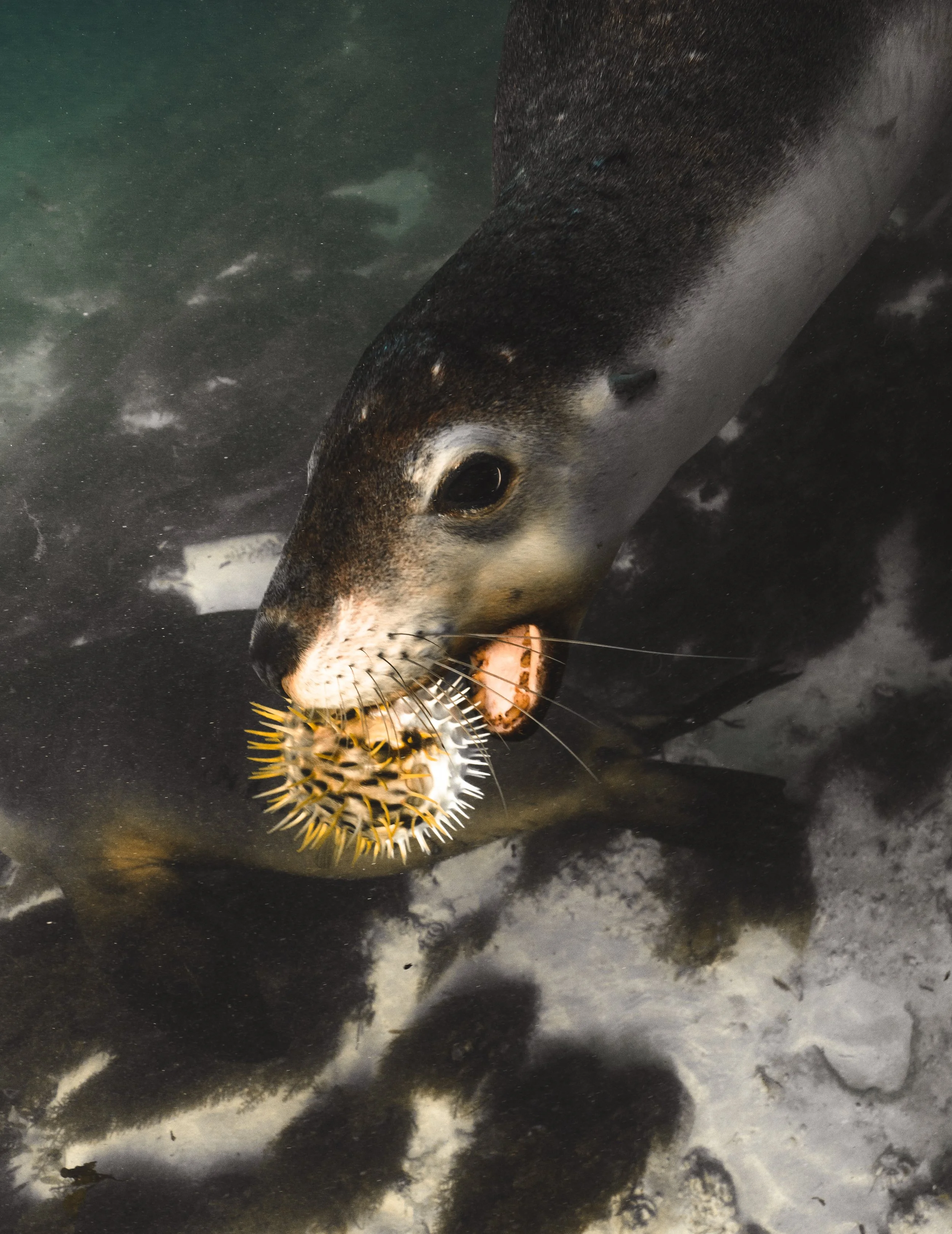
Australian sea lions communicate through a fascinating combination of vocalisations, body language and underwater movement.
Mothers and pups recognise one another using unique calls, allowing them to reunite after feeding trips amongst busy breeding colonies. Adults also communicate through posture, facial expressions and movement, helping establish social relationships and avoid unnecessary conflict.
Underwater, communication becomes even more subtle. Eye contact, body position and playful movement all play an important role in how Australian sea lions interact with one another. Playful biting, gentle nudging and chasing are all common behaviours, particularly among juveniles. Although this behaviour may appear aggressive to first-time observers, it is a normal part of social interaction, learning and play.
How do Australian sea lions communicate?
────
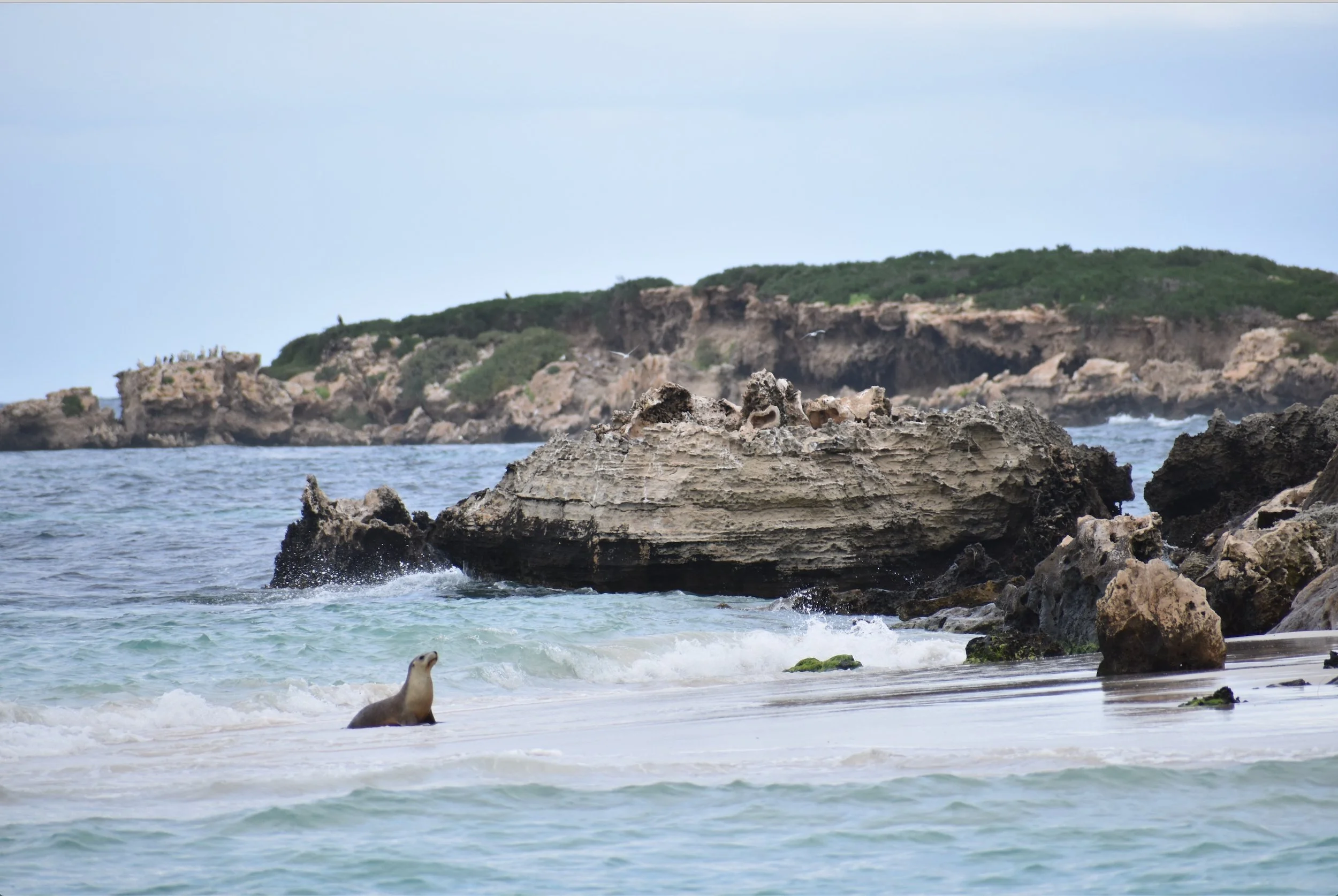
Australian sea lions live in close-knit breeding colonies found on remote islands and protected beaches throughout southern and western Australia.
One of the most remarkable characteristics of Australian sea lions is their loyalty to their birthplace. Female sea lions spend their entire lives returning to the colony where they were born, giving birth and raising their own pups on the same island generation after generation. This strong site fidelity means individual colonies remain genetically and socially distinct, making every breeding island critically important to the long-term survival of the species.
Much of colony life is surprisingly peaceful. Mothers care for their pups, juveniles spend hours playing and learning, while adults rest and conserve energy between feeding trips.
Life Inside a Sea Lion Colony
────
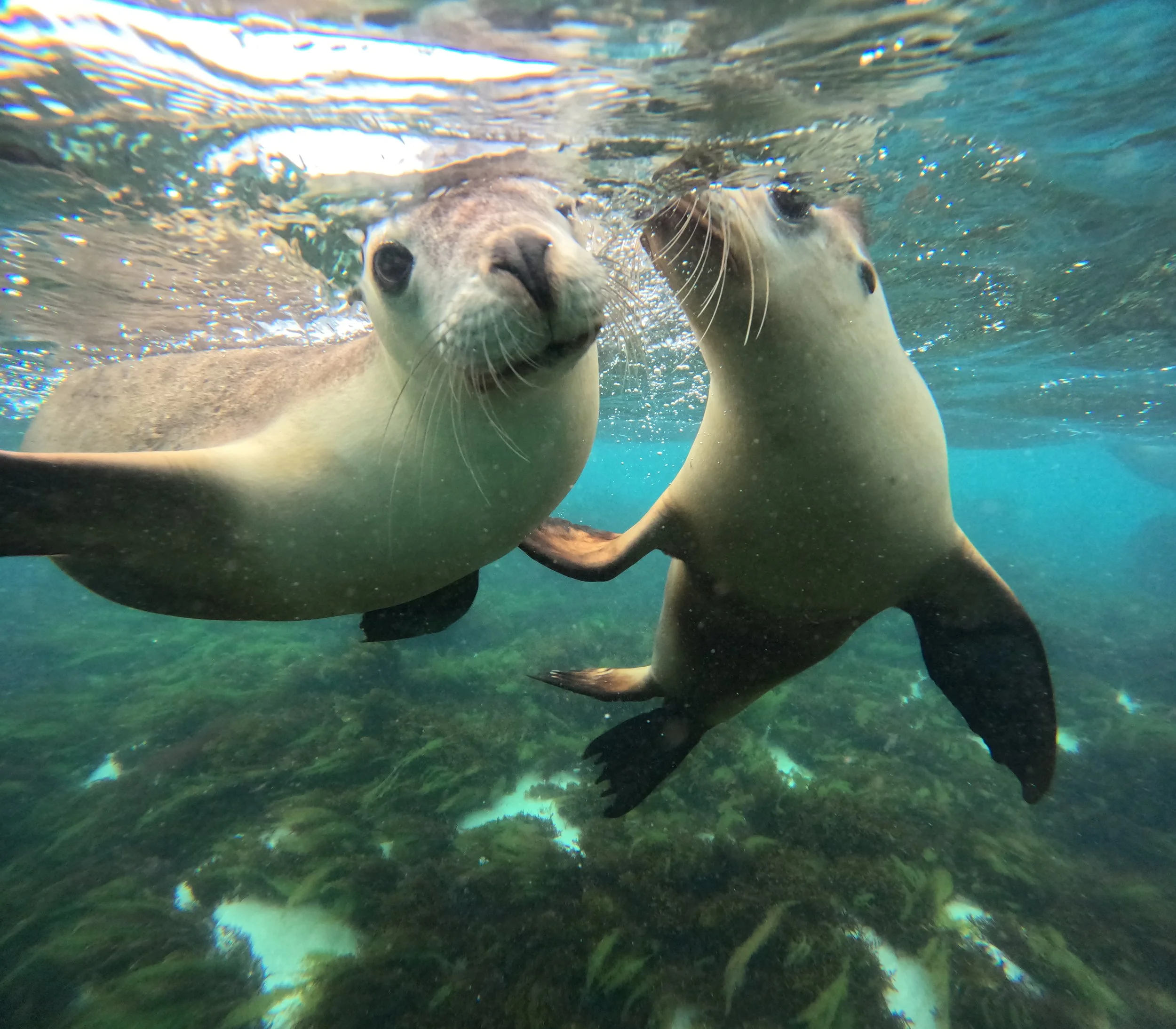
Play is one of the defining characteristics of Australian sea lions.
Young sea lions wrestle, chase one another through the water, carry seaweed and investigate almost anything that catches their attention. These playful interactions are much more than entertainment—they help young animals develop the coordination, strength and confidence they'll need throughout their lives.
Visitors swimming with Australian sea lions often witness this playful curiosity firsthand, although every interaction always occurs on the animals' terms.
Why Do Australian Sea Lions Play?
────
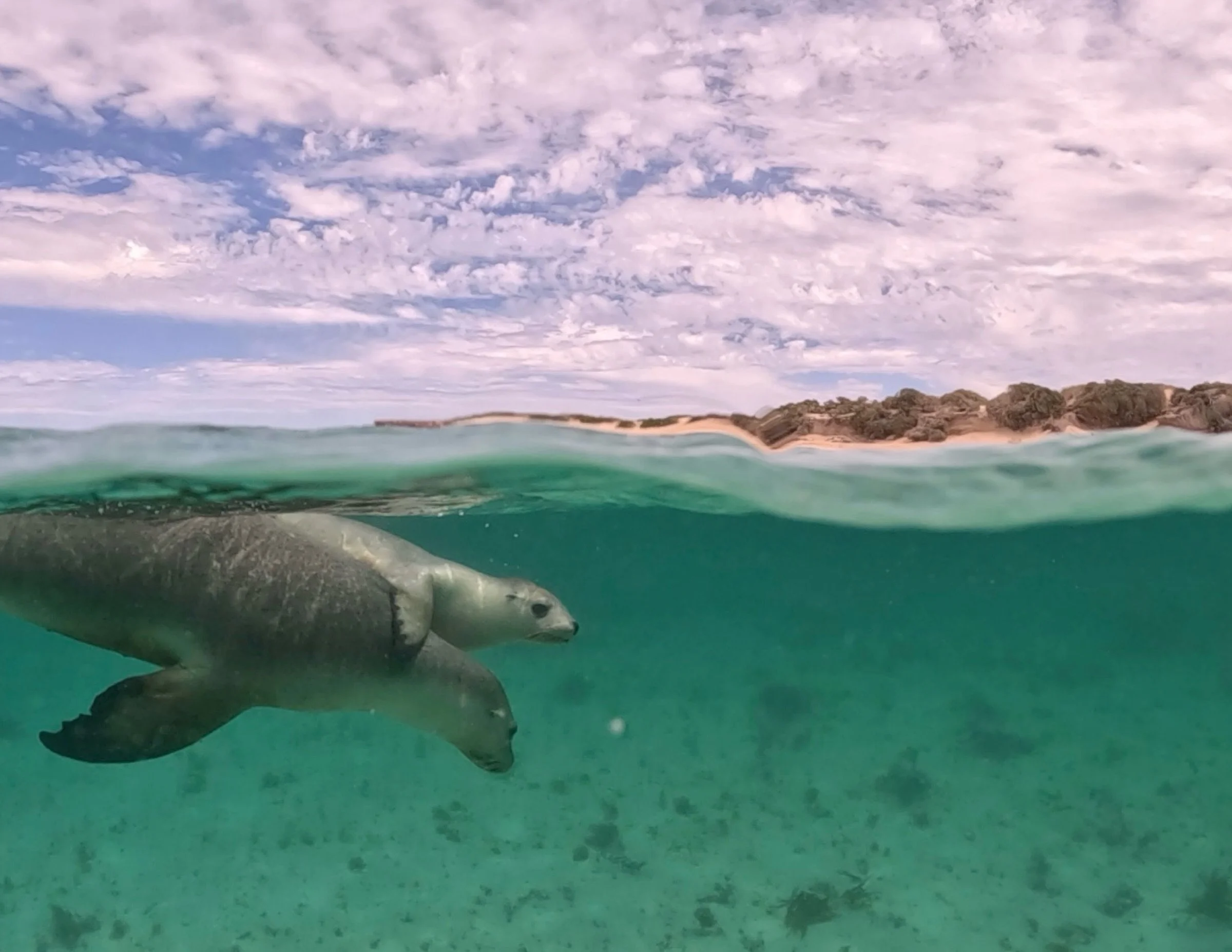
The relationship between a mother and her pup is one of the strongest bonds within a sea lion colony.
After giving birth, mothers nurse and protect their pups while making regular foraging trips out to sea. When they return, they locate their own pup using unique vocal calls that allow mother and offspring to recognise one another amongst dozens of other sea lions.
This close relationship continues for many months while pups gradually learn to swim, explore and become independent.
Mothers and Pups
────
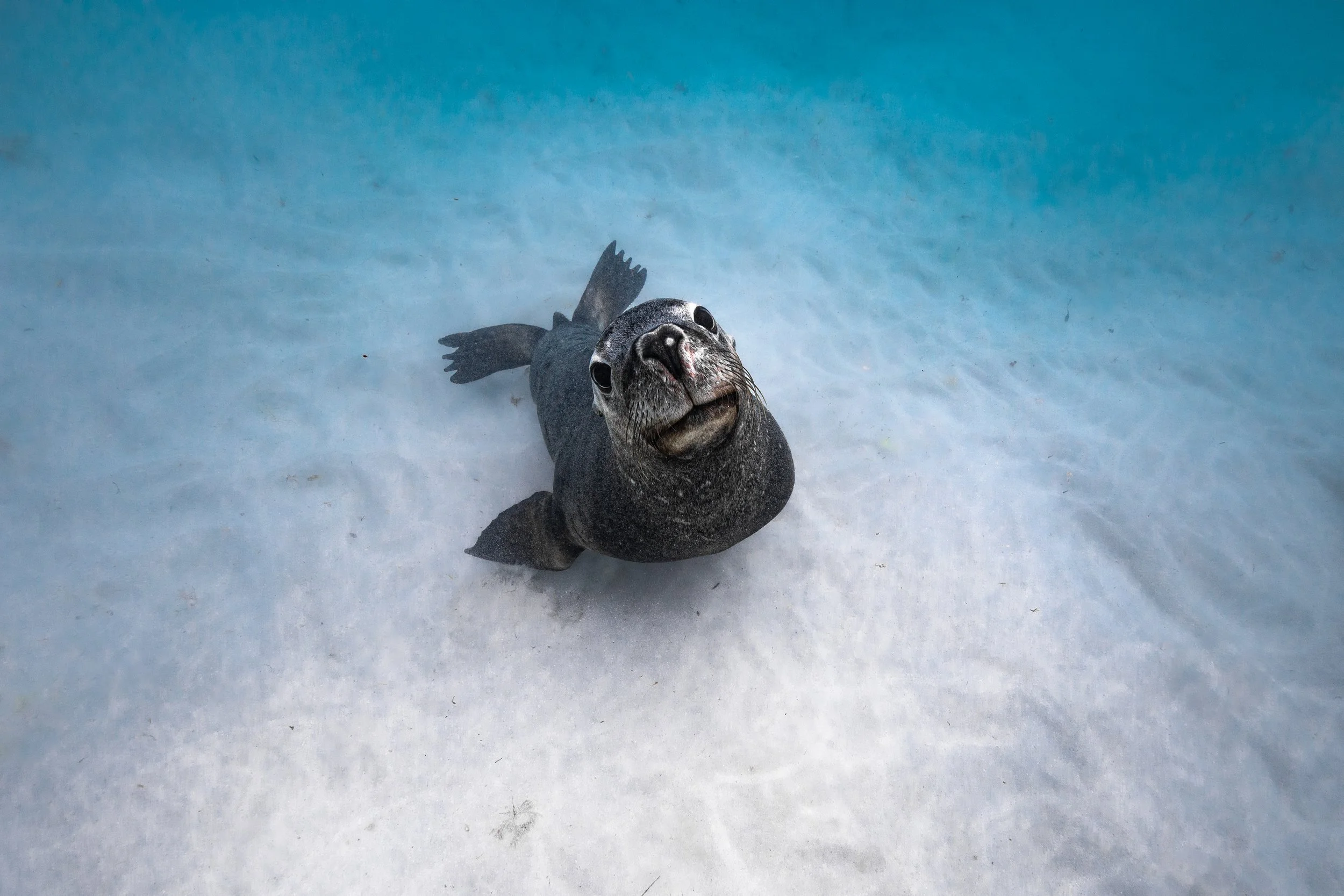
Adult male Australian sea lions, known as bulls, play a very different role within the colony.
During the breeding season, dominant males compete for access to females and defend small territories using displays of strength, vocalisations and body posture. Serious fights are relatively uncommon, with most disputes resolved through visual displays rather than physical conflict.
Outside the breeding season, bulls spend much of their time feeding and resting alongside the rest of the colony.
Bulls and Territory
────
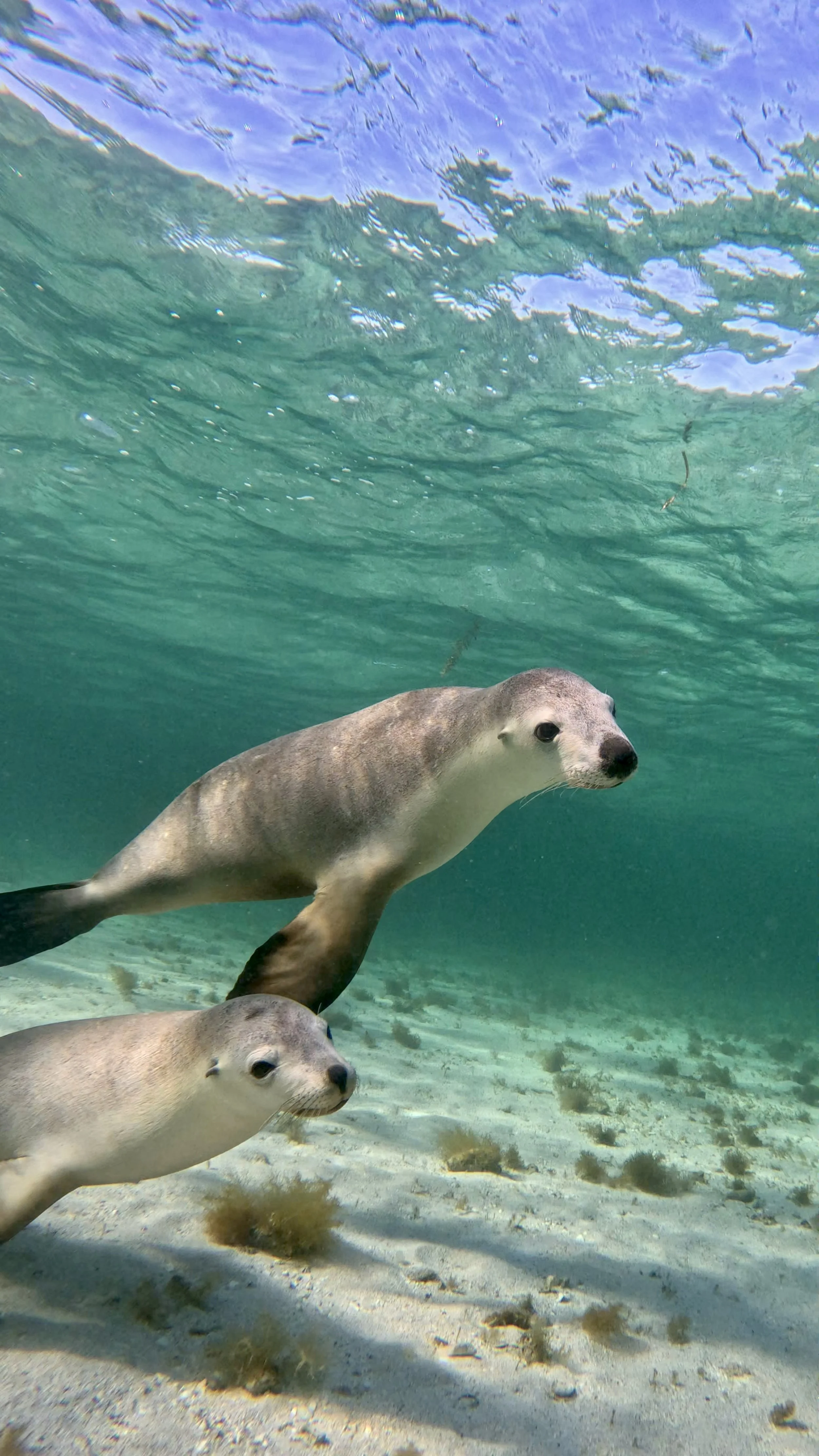
One of the reasons Australian sea lions are such remarkable wildlife encounters is that their behaviour constantly changes.
Weather conditions, water visibility, breeding activity, feeding success, tides and the personalities of individual animals all influence how sea lions behave on any given day.
Some tours are filled with playful juveniles darting through the water, while others offer quieter moments observing adults resting peacefully beneath the surface.
Because these animals are completely wild, every encounter is unique—and that's exactly what makes swimming with Australian sea lions such an unforgettable experience.
Every Encounter is Different
────
Frequently Asked Questions
-
Play is an important part of life for Australian sea lions, particularly during their younger years. Chasing, wrestling, playful biting and investigating objects all help juveniles develop swimming skills, coordination and social bonds. These behaviours prepare them for life in the wild while strengthening relationships within the colony.
-
Australian sea lions communicate using a combination of vocal calls, body language and physical interaction. Mothers and pups recognise one another through distinctive calls, while adults use posture, movement and facial expressions to communicate. Juveniles also interact through chasing, nudging and playful biting, which forms an important part of their social development.
-
Playful biting is a normal behaviour, especially among young Australian sea lions. It helps them develop coordination, practise social interactions and learn boundaries with other sea lions. Although it can appear rough, this behaviour is usually playful rather than aggressive. Because sea lions naturally communicate through mouthing and biting, visitors should never attempt to touch them, allowing all interactions to remain safe and natural.
-
Australian sea lions are generally curious and intelligent animals rather than aggressive. However, they are powerful wild marine mammals whose behaviour can change depending on breeding activity, age and individual temperament. They should always be respected, given space and observed without attempting to touch or influence their behaviour.
-
Australian sea lions are naturally inquisitive and may choose to approach swimmers or snorkellers out of curiosity. Some individuals will swim nearby, make eye contact or mimic movements, while others may simply observe from a distance. Every interaction is voluntary and should always occur on the sea lion's terms, without chasing, feeding or touching the animals.
-
Yes. Australian sea lions live in breeding colonies made up of mothers, pups, juveniles and adult males. These colonies provide opportunities for raising young, social interaction and learning. Female Australian sea lions return to the same colony where they were born to have their own pups, making each breeding colony an important part of the species' long-term survival.
Continue Exploring Our Australian Sea Lion Guides
READY TO MEET AN AUSTRALIAN SEA LION IN THE WILD?
There's no better way to understand Australian sea lions than seeing them in their natural environment.
Join Australia's original Australian sea lion tour operator and experience one of the world's rarest marine mammals in the crystal-clear waters of the Jurien Bay Marine Park.
@jurienbayoceanic